
Overview
Diagnosis
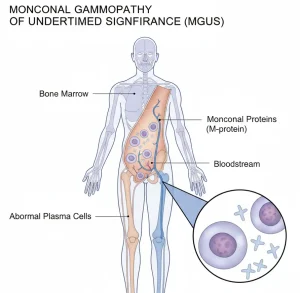
Monoclonal gammopathy of undetermined significance (MGUS) often causes no symptoms and is usually discovered by chance during routine blood tests. After an initial finding, additional tests may be done to confirm the diagnosis and check for complications:
• More blood tests to rule out other causes of elevated protein levels and to assess kidney function
• Urine tests collected over 24 hours to detect atypical proteins and check kidney health
• Imaging tests such as X-rays, MRI, or PET scans to evaluate bone problems in people with bone pain, and bone density tests to measure bone mass
• Bone marrow test, in which a small sample of bone marrow is taken from the hipbone for examination; usually reserved for those at higher risk of developing more serious conditions
Treatment
MGUS typically does not require treatment. Instead, regular checkups are recommended to monitor the condition. These checkups usually begin six months after diagnosis.
Watchful waiting is especially important for people at higher risk of progression, allowing for early intervention if needed. Symptoms to monitor include:
• Bone pain
• Fatigue or weakness
• Unexplained weight loss
• Fever or night sweats
• Headache, dizziness, nerve pain, or changes in vision or hearing
• Bleeding
• Anemia or other blood abnormalities
• Swelling of lymph nodes, liver, or spleen
In some cases, medications for osteoporosis may be prescribed to help maintain bone mass. Examples include alendronate (Fosamax), risedronate (Actonel, Atelvia), ibandronate, and zoledronic acid (Reclast, Zometa).
Regular monitoring ensures that any changes in health are detected early, and treatment can begin promptly if necessary.
Advertisement
