
Overview
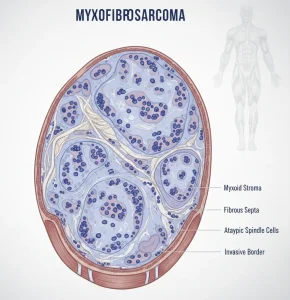
Diagnosis
Tests and procedures used to diagnose myxofibrosarcoma include:
Physical exam. Your healthcare professional may ask about your symptoms and overall health. They may also examine your body for signs of cancer.
Imaging tests. Imaging can help determine the size and location of the cancer. MRI is often used to closely examine soft tissue, bone, and muscle. CT scans or other imaging tests may be performed to check if the cancer has spread to other parts of the body.
Biopsy. A biopsy involves taking a tissue sample from the suspicious area, usually with a needle. The tissue is sent to a lab to confirm whether cancer is present and to determine its type. Sometimes surgical biopsy is necessary to get a sufficient sample.
Myxofibrosarcoma can be challenging to diagnose because it may resemble other cancers or non-cancerous conditions. Careful imaging and lab testing help healthcare professionals make an accurate diagnosis.
Treatment
Treatment for myxofibrosarcoma often involves surgery to remove the cancer. Radiation therapy and chemotherapy may also be used, sometimes before or after surgery, to reduce the risk of the cancer returning. The specific treatment plan depends on the size, location, and characteristics of the cancer.
Surgery
The goal of surgery is to remove as much of the cancer as possible. If the tumor is completely removed, additional treatment may not be necessary.
Some myxofibrosarcomas are difficult to remove entirely because they can spread into surrounding tissues and grow near vital structures such as nerves and blood vessels. In these cases, radiation or chemotherapy may be used before surgery to shrink the tumor, making it easier to remove and reducing the chance of recurrence.
In the past, amputation was sometimes required, but modern approaches often avoid this due to improved preoperative treatments.
Radiation therapy
Radiation therapy uses high-energy beams, such as X-rays or protons, to kill cancer cells.
It can be used before surgery to shrink the tumor or after surgery to destroy any remaining cancer cells.
Chemotherapy
Chemotherapy uses powerful medications to treat cancer. It may help control aggressive tumors or those that have spread to other parts of the body.
Clinical trials
Clinical trials test new treatments and offer access to the latest therapies. Participation may provide additional options, though side effects and effectiveness may not be fully known. Your healthcare team can advise if a clinical trial is suitable.
Request an appointment
Advertisement
