
Overview
Diagnosis
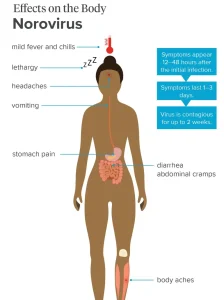
Norovirus infection is usually diagnosed based on symptoms and recent exposure history, especially when multiple people in the same environment develop similar gastrointestinal symptoms. A healthcare provider will evaluate signs such as sudden vomiting, diarrhea, abdominal cramps, and low-grade fever.
In most cases, testing is not required because symptoms are distinctive and self-limiting. However, laboratory tests may be used to confirm infection in severe cases or during outbreaks:
-
Stool tests to detect norovirus genetic material
-
Reverse transcription polymerase chain reaction (RT-PCR) assays for precise identification
Doctors also rule out other causes of gastroenteritis, including bacterial infections or other viral pathogens.
Treatment
There is no specific antiviral treatment for norovirus infection. Management focuses on relieving symptoms and preventing dehydration:
-
Drink plenty of fluids, including water, oral rehydration solutions, or clear broths
-
Rest to allow the body to recover
-
Eat light, easily digestible foods as tolerated once vomiting subsides
-
Use over-the-counter medications like anti-nausea or anti-diarrheal drugs only under medical guidance
-
Seek medical attention for severe dehydration, persistent vomiting, or in vulnerable individuals such as young children, older adults, or those with chronic illnesses
Most people recover within 1 to 3 days, but careful fluid replacement and symptom management are key to preventing complications.
Request an appointment
Advertisement
