
Overview
Diagnosis
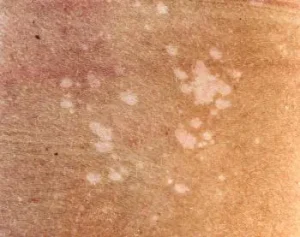
A healthcare professional can often diagnose tinea versicolor simply by examining the affected skin. In many cases, a skin scraping is taken to check for fungus under a microscope. This is a quick and painless in-office procedure. If uncertainty remains, a skin biopsy may be recommended. A biopsy involves removing a small tissue sample for laboratory testing.
Treatment
Treatment for tinea versicolor usually begins with nonprescription antifungal products designed to kill the fungus. If these are not effective, prescription-strength medicines may be needed. Some treatments are applied directly to the skin, while others are taken by mouth. Examples include:
• Ketoconazole cream or shampoo
• Ciclopirox cream, gel or shampoo
• Fluconazole tablets or oral solution
• Itraconazole capsules or oral solution
• Selenium sulfide 2.5 percent lotion or shampoo
It may take several weeks or months for skin color to return to normal. The infection can come back in hot and humid conditions. If you experience frequent recurrences, your healthcare professional may recommend taking medication once or twice a month to help prevent future infections.
Advertisement
