
Overview
Diagnosis
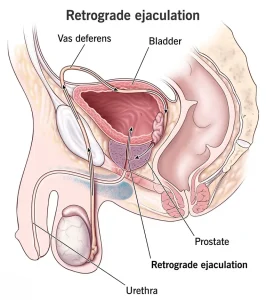
To diagnose retrograde ejaculation, your doctor may begin by asking detailed questions about your symptoms and how long they have been occurring. You may also be asked about past medical conditions, surgeries, cancers, and medications that could influence ejaculation.
A physical exam is usually performed. This often includes an examination of the penis, testicles, and rectum to check for any abnormalities.
Your doctor may also examine your urine for the presence of semen after orgasm. This is typically done in the clinic. You will be asked to empty your bladder, masturbate to climax, and provide a urine sample. If a large amount of sperm is found in the urine, it indicates retrograde ejaculation.
If you experience dry orgasms but no semen is detected in the bladder, your doctor may suspect a problem with semen production. This can occur due to damage to the prostate or semen-producing glands, often related to surgery or radiation in the pelvic region.
If retrograde ejaculation is ruled out, further diagnostic tests or referral to a specialist may be required to determine the cause of dry orgasm.
Treatment
Retrograde ejaculation usually does not require treatment unless it affects fertility. When fertility is a concern, management depends on the underlying cause.
Medications may be helpful when retrograde ejaculation results from nerve damage caused by conditions such as diabetes, multiple sclerosis, certain surgeries, or other medical issues. These drugs are not effective if the cause is anatomical changes due to procedures like bladder neck surgery or transurethral resection of the prostate.
If your current medications are the suspected cause, your doctor may advise stopping them temporarily. Drugs known to contribute to retrograde ejaculation include certain antidepressants and alpha blockers used for high blood pressure and prostate problems.
Medications sometimes used to manage retrograde ejaculation include:
-
Imipramine, an antidepressant
-
Midodrine, a medication that tightens blood vessels
-
Chlorpheniramine and brompheniramine, antihistamines
-
Ephedrine, pseudoephedrine and phenylephrine, commonly used for cold symptoms
These drugs can help tighten the bladder neck muscle during ejaculation. Although they are often effective, they can also cause side effects and interact with other medications. Some may raise blood pressure or heart rate, which can be risky for individuals with hypertension or heart disease.
If fertility is the goal, treatment may be needed to help your partner become pregnant. Adequate semen must be ejaculated to allow sperm to reach the uterus. If medications do not restore normal ejaculation, assisted reproductive technology may be required. In some cases, sperm can be collected from the bladder, processed, and used for intrauterine insemination.
More advanced assisted reproductive methods may be necessary in certain situations. Many men with retrograde ejaculation achieve successful pregnancies with the right treatment approach.
Advertisement
