
Overview
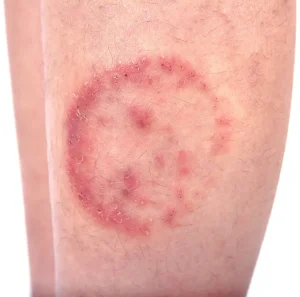
Diagnosis
A healthcare professional can often diagnose ringworm simply by examining the affected skin. In some cases, skin scrapings are taken from the rash so they can be viewed under a microscope. This helps confirm the presence of fungi and rule out other skin conditions that may look similar.
Treatment
If over-the-counter antifungal products do not clear the infection, a prescription-strength antifungal cream, lotion or ointment may be needed. For severe or widespread infections, antifungal pills might be prescribed to more effectively target the fungus from within the body.
Self care
For mild cases, certain self-care steps may help manage symptoms and encourage healing.
-
Keep the affected area clean and dry.
-
Apply an over-the-counter antifungal cream, lotion or ointment such as clotrimazole or terbinafine as directed on the package.
Preparing for your appointment
A family doctor or dermatologist can diagnose ringworm of the body. Preparing ahead of time can help you make the most of your visit. Think about the questions you may want to ask, such as what might be causing the symptoms, whether tests are needed, the best treatment options and whether the condition is temporary or long-lasting. You might also ask about generic medications, whether it is safe to wait before starting treatment, how to prevent the infection from spreading and what skin care routines may help during recovery.
During the appointment, your doctor may ask when the symptoms first appeared, how the rash looked when it began and whether you have had similar rashes before. They may want to know if any pets or family members have ringworm, whether the rash is painful or itchy and whether you have tried any medications already. These details help guide diagnosis and treatment.
Advertisement
