
Overview
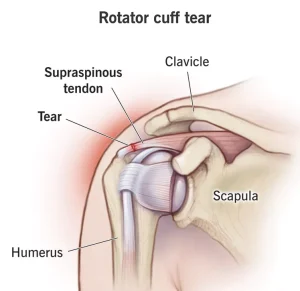
Diagnosis
A physical exam is the first step in diagnosing a rotator cuff injury. During this exam, a healthcare professional presses on different parts of the shoulder, moves the arm into various positions and checks the strength of the shoulder and arm muscles.
Imaging tests may be used to support the diagnosis. These can include:
-
X-rays, which help detect bone spurs or other possible causes of shoulder pain, such as arthritis, even though a rotator cuff tear itself does not appear on an X-ray.
-
Ultrasound, which uses sound waves to create images of soft tissues, allowing real-time assessment of the shoulder structures and comparison between the affected and healthy shoulders.
-
Magnetic resonance imaging, or MRI, which uses radio waves and a strong magnet to provide detailed images of all the shoulder structures.
Treatment
Many rotator cuff injuries improve with conservative treatment, such as rest, ice and physical therapy. More-severe injuries may require surgical intervention.
Physical therapy is often the first recommended step. Tailored exercises can help restore flexibility and strength to the shoulder. Physical therapy also plays an important role in recovery after rotator cuff surgery.
In some cases, an injection into the shoulder joint may help if pain interferes with sleep, daily activities or physical therapy. While injections can offer temporary relief, they may weaken the tendon and lower the success rate of future surgery.
Surgical options vary based on the severity and type of injury. Procedures include arthroscopic tendon repair using small incisions and a camera, open tendon repair through a larger incision, tendon transfer when the damaged tendon cannot be reattached and shoulder replacement for extensive injuries. A reverse shoulder arthroplasty may be used to improve joint stability when a standard replacement is not suitable.
Advertisement
