
Overview
Diagnosis
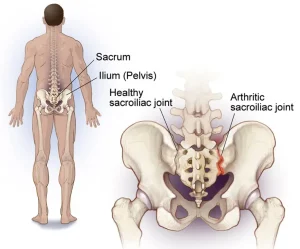
Diagnosis of sacroiliitis begins with a physical exam. A health care provider may gently press on the hips and buttocks to identify the source of pain. The legs may also be moved into different positions to apply stress to the sacroiliac joints and check for discomfort.
Imaging tests can help confirm the cause of symptoms. An X-ray of the pelvis may reveal joint damage. An MRI can show whether the sacroiliac joint changes are related to conditions such as ankylosing spondylitis.
A numbing injection can also help identify the problem. If pain improves after numbing medicine is placed into the sacroiliac joint, it suggests the joint is the source of the issue.
These imaging options may be used for further evaluation:
-
CT scan
-
MRI
-
Ultrasound
Treatment
Treatment for sacroiliitis focuses on easing pain and improving function. The approach depends on the cause of symptoms. Stretching routines, strengthening exercises, and nonsteroidal anti-inflammatory medicines available without a prescription are often the first recommended steps.
Medicines may also be used to reduce inflammation and control pain:
-
Pain relievers such as ibuprofen or naproxen sodium may help when taken as directed. If these are not effective enough, stronger prescription options may be recommended.
-
Muscle relaxers like cyclobenzaprine can help reduce muscle spasms that often occur with sacroiliitis.
-
Biologic medicines, including IL-17 inhibitors such as secukinumab and ixekizumab, and TNF inhibitors such as etanercept, adalimumab, infliximab, and golimumab, may be used when sacroiliitis is linked to autoimmune conditions.
-
Disease-modifying antirheumatic drugs, including JAK inhibitors such as tofacitinib and upadacitinib, may help decrease inflammation.
Therapy plays a key role in treatment. A physical therapist can teach stretching and range-of-motion exercises to ease pain and maintain flexibility in the hips and lower back. Strengthening exercises help support the joints and improve posture.
Sometimes additional procedures may be recommended if pain continues despite other treatments:
-
Corticosteroid shots into the joint may reduce inflammation, but only a few are given per year because of the possible effects on bones and tendons.
-
Radiofrequency denervation uses targeted energy to disrupt the nerve pathways causing pain.
-
Electrical stimulation placed in the lower spine may help reduce chronic discomfort.
-
Joint fusion using metal hardware is rarely needed but may be considered when other options do not provide relief.
Advertisement
