
Overview
Diagnosis
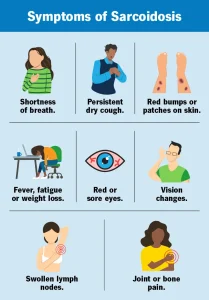
Diagnosing sarcoidosis can be challenging because early symptoms may be minimal or similar to those of other conditions. Evaluation begins with a physical exam and a discussion about symptoms and possible risk factors. A healthcare professional listens to the heart and lungs, checks for swollen lymph nodes and examines any skin lesions that may suggest involvement.
There is no single test that can confirm sarcoidosis. Instead, testing helps rule out other conditions and identifies which organs may be affected. Tests may include:
-
Blood and urine tests to check overall health and kidney and liver function
-
Chest X-ray to examine the lungs and heart
-
CT scan of the chest for more detailed imaging
-
Lung function tests to measure airflow and oxygen exchange
-
Electrocardiogram and cardiac ultrasound to evaluate heart health
-
Eye exam to detect vision changes caused by sarcoidosis
-
PET scan or MRI if the heart or nervous system may be involved
Additional tests may be added based on symptoms and findings.
A biopsy may also be recommended. During a biopsy, a small sample of tissue is removed from an affected area such as the skin, lungs or lymph nodes. The sample is examined for granulomas, which are characteristic of sarcoidosis.
Treatment
Sarcoidosis often improves on its own, and not everyone needs treatment. When symptoms are mild or nonexistent, monitoring may be the only care needed. For those who require treatment, the goal is to reduce inflammation and control the body’s immune response.
Medicines may be used when symptoms are more severe or when organ function is affected. These medicines can include:
-
Corticosteroids that reduce inflammation and may be taken as pills, shots or applied directly to the affected area
-
Immune-suppressing medicines such as methotrexate and azathioprine, which help lessen the immune response
-
Hydroxychloroquine, which may help with skin lesions and high calcium levels
-
TNF-alpha inhibitors, often used when other treatments have not been effective
Additional treatments may be needed depending on complications. These may include physical therapy to reduce fatigue, pulmonary rehabilitation to improve breathing, or implanted devices to manage heart rhythm problems. In severe cases, organ transplant may be considered if the lungs, heart or liver are significantly damaged.
Ongoing monitoring is an essential part of managing sarcoidosis. Follow-up frequency depends on symptoms and treatment response. Regular visits help track symptoms, evaluate treatment effectiveness and detect complications early. Monitoring may include repeat chest X-rays, blood and urine tests, EKGs and exams of the eyes, lungs, skin and other affected organs. Long-term follow-up is often necessary.
Advertisement
