
Overview
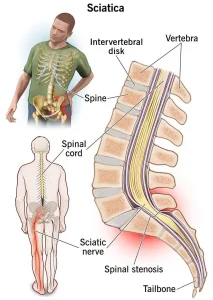
Diagnosis
During a physical exam, a healthcare professional may check muscle strength and reflexes. You might be asked to walk on your toes or heels, rise from a squatting position, or lift your legs one at a time while lying on your back. These assessments help identify the source of sciatica pain.
Tests
People with severe or persistent pain may need additional tests:
-
X-ray — Can reveal mechanical changes in the spine that affect the size of the openings where nerve roots exit.
-
MRI — Uses a powerful magnet and radio waves to produce detailed images of soft tissues, showing herniated disks and pinched nerves.
-
CT scan — May involve a dye injected into the spinal canal (CT myelogram) to highlight the spinal cord and nerves for clearer imaging.
-
Electromyography (EMG) — Measures electrical impulses in nerves and muscle responses to confirm the severity of nerve root injury.
Treatment
Treatment for sciatica focuses on relieving pain, improving function, and preventing future episodes.
Medications
Medicines that may be used to treat sciatica include:
-
Anti-inflammatories
-
Corticosteroids
-
Antidepressants
-
Anti-seizure medications
-
Opioids
Physical therapy
After pain improves, a healthcare professional can design a program to prevent future injuries. This often includes exercises to improve posture, strengthen core muscles, and enhance range of motion.
Steroid injections
Corticosteroid injections around the affected nerve root can reduce inflammation and relieve pain. Usually, one injection is effective, but up to three injections may be given in a year if needed.
Surgery
Surgery may be considered if there is severe weakness, loss of bowel or bladder control, or pain that does not improve with other treatments. Procedures can remove bone spurs or portions of herniated disks pressing on the nerve.
Advertisement
