
Overview
Diagnosis
Diagnosis of a sexually transmitted disease (STD) begins with a detailed sexual history and evaluation of current symptoms. Your healthcare professional may perform a physical or pelvic exam to look for signs of infection, such as rashes, warts, or unusual discharge.
Lab tests are used to confirm the presence of infections and can also detect STDs in people who do not have symptoms. Common testing methods include:
-
Blood tests. These can confirm infections such as HIV or later stages of syphilis.
-
Urine samples. Certain STDs can be diagnosed with urine tests.
-
Fluid samples. Fluid from open genital sores can be tested to identify the type of infection.
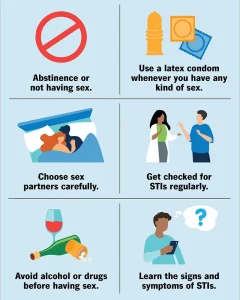
Screening involves testing for STDs in individuals without symptoms. Screening is generally recommended based on risk factors, changes in sexual behavior, or specific life circumstances, such as incarceration.
Recommended screening
-
General population: HIV testing at least once between ages 15 and 65, with annual testing for those at high risk. Hepatitis B screening at least once for adults 18 and older, and hepatitis C screening for all adults.
-
Pregnant women: Screening for HIV, hepatitis B, chlamydia, and syphilis early in pregnancy. Additional testing for gonorrhea and hepatitis C may be advised for high-risk women. Hepatitis B screening is recommended during each pregnancy.
-
Women age 21 and older: Pap tests to detect cervical cell changes, including inflammation, precancerous changes, and cancer. Screening typically every three years for Pap tests alone or every five years if combined with HPV testing after age 30.
-
Women under 25 who are sexually active: Annual chlamydia and gonorrhea testing. Retesting for chlamydia is recommended three months after treatment or if there is a new sexual partner.
-
Men who have sex with men: Annual or more frequent screening for HIV, syphilis, chlamydia, gonorrhea, and evaluation for hepatitis B.
-
People with HIV: Immediate testing for syphilis, gonorrhea, chlamydia, herpes, and hepatitis C. Women with HIV should have a Pap test at diagnosis or within a year of becoming sexually active, then annually for three years, followed by a Pap test every three years after three negative results.
-
People with new partners: Both partners should be tested for STDs before engaging in vaginal or anal sex. Routine testing for genital herpes is not recommended unless symptoms are present.
Keep in mind that recent infections may not be detected immediately, and negative test results do not always rule out infection if exposure was recent.
Advertisement
