
Overview
Diagnosis
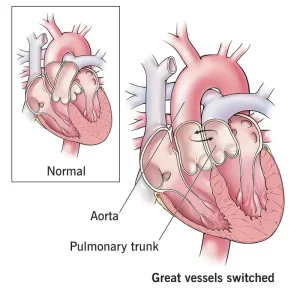
Transposition of the great arteries (TGA) is often diagnosed before birth during a routine pregnancy ultrasound. If not detected prenatally, it is usually identified soon after birth.
Immediately after birth, a healthcare professional listens to the baby’s heart and lungs. A whooshing heart sound, called a murmur, may be heard. Some murmurs are caused by changes in blood flow to and from the heart.
Tests
Tests to diagnose TGA include:
• Echocardiogram – Uses sound waves to create images of the beating heart. It shows how blood moves through the heart and valves and can confirm the positions of the two main arteries. A fetal echocardiogram is done before birth if needed.
• Chest X-ray – Shows the condition of the heart and lungs and helps assess heart size.
• Electrocardiogram (ECG or EKG) – Records the electrical activity of the heart using electrodes on the chest, arms, and legs.
• Pulse oximetry – Measures oxygen levels in the blood, with low levels suggesting a heart or lung condition.
Treatment
Treatment depends on the type of transposition of the great arteries.
All babies with complete transposition (d-TGA) require surgery soon after birth. Treatment for congenitally corrected transposition (l-TGA) depends on when it is diagnosed and the presence of other heart conditions.
Medications
Before heart repair surgery, prostaglandin may be given to improve blood mixing and oxygenation. After surgery, medicines may help:
• Control heartbeat
• Manage blood pressure
• Remove excess fluid from the body
Surgery or other procedures
Surgery is usually performed within the first days to weeks after birth. Options include:
• Atrial septostomy – Temporary procedure to widen the connection between the upper heart chambers, improving oxygen levels.
• Arterial switch operation – Corrects the positions of the main arteries and moves the coronary arteries. Other heart defects may also be repaired.
• Atrial switch operation – Redirects blood flow between the upper chambers, making the right lower chamber pump blood to the body.
• Rastelli operation – Patches a ventricular septal defect and redirects blood flow from the left lower chamber to the aorta; a valve connects the right lower chamber to the lung artery.
• Double switch procedure – Treats congenitally corrected transposition by switching artery connections so the left lower chamber pumps oxygen-rich blood to the body.
Babies with TGA may require additional heart surgeries for other conditions or complications. Pacemakers may be needed if the heartbeat is affected.
Follow-up care
After surgery, regular lifelong checkups are necessary with a congenital cardiologist. Advances in surgery allow most babies with TGA to grow up leading active lives.
Advertisement
