
Overview
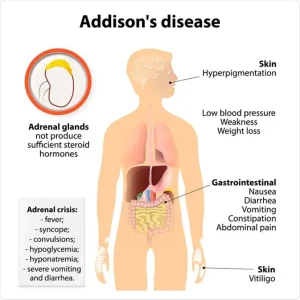
Addison’s disease is a rare condition that occurs when the body does not produce enough of certain hormones. It is also called primary adrenal insufficiency. In this condition, the adrenal glands produce too little cortisol and often too little aldosterone as well.
Addison’s disease develops when the adrenal glands are damaged. Symptoms usually appear slowly over time. Early signs may include extreme tiredness, craving salty foods, and unexplained weight loss.
The condition can affect people of any age. Without treatment, Addison’s disease can be life-threatening. Treatment focuses on replacing the missing hormones with laboratory-made versions, allowing many people to live normal, active lives.
Symptoms
Symptoms of Addison’s disease often develop gradually over months. Because they start slowly, they may be overlooked at first. Physical stress, such as illness or injury, can cause symptoms to worsen quickly.
Early symptoms that affect energy and physical comfort may include:
-
Extreme tiredness or fatigue
-
Dizziness or fainting when standing up, caused by low blood pressure
-
Sweating related to low blood sugar
-
Nausea, diarrhea, or vomiting
-
Pain in the abdomen
-
Muscle cramps, muscle weakness, widespread pain, or joint pain
Other early symptoms may change physical appearance, including:
-
Loss of body hair
-
Darkened areas of skin, especially on scars and moles
-
Weight loss due to reduced appetite
Addison’s disease can also affect mood and mental well-being:
-
Depression
-
Irritability
-
Reduced sex drive in women
-
Craving salty foods
Emergency symptoms due to adrenal crisis
In some cases, symptoms worsen suddenly, leading to an adrenal crisis. This is a medical emergency. Seek emergency care right away if any of the following occur:
-
Severe weakness
-
Sudden, intense pain in the lower back, abdomen, or legs
-
Severe vomiting or diarrhea
-
Extreme dehydration
-
Fever
-
Confusion or reduced awareness
-
Loss of consciousness
-
Low blood pressure and fainting
Without prompt treatment, adrenal crisis can be fatal.
When to see a doctor
Contact a healthcare professional if you have ongoing symptoms such as:
-
Long-lasting fatigue
-
Muscle weakness
-
Loss of appetite
-
Darkening of the skin
-
Unintentional weight loss
-
Persistent nausea, vomiting, or abdominal pain
-
Lightheadedness or fainting when standing
-
Salt cravings
Seek emergency medical care immediately if symptoms of adrenal crisis appear.
Causes
Addison’s disease occurs when the adrenal glands are damaged. These glands sit above the kidneys and are part of the endocrine system, which produces hormones that regulate many body functions.
The adrenal glands have two layers. The inner layer produces hormones such as adrenaline. The outer layer produces corticosteroids, which include:
-
Glucocorticoids, such as cortisol, which help regulate metabolism, immune response, and stress
-
Mineralocorticoids, such as aldosterone, which help maintain blood pressure and balance sodium and potassium
-
Androgens, which influence muscle mass, body hair, sex drive, and overall well-being
Addison’s disease or primary adrenal insufficiency
In primary adrenal insufficiency, the outer layer of the adrenal glands is damaged and cannot produce enough hormones. The most common cause is an autoimmune disease in which the immune system attacks the adrenal glands.
Other possible causes include:
-
Tuberculosis affecting the adrenal glands
-
Other infections of the adrenal glands
-
Cancer spreading to the adrenal glands
-
Bleeding into the adrenal glands
-
Genetic conditions such as congenital adrenal hyperplasia
-
Medicines that block hormone production or hormone action
-
Certain cancer treatments, including checkpoint inhibitors
Secondary adrenal insufficiency
Secondary adrenal insufficiency occurs when the pituitary gland does not produce enough adrenocorticotropic hormone, or ACTH. ACTH signals the adrenal glands to make cortisol.
This condition shares many symptoms with Addison’s disease but differs in some ways. Skin darkening is uncommon, dehydration and low blood pressure are less severe, and low blood sugar is more likely.
Causes of reduced ACTH production include:
-
Noncancerous pituitary tumors
-
Surgery or radiation involving the pituitary gland
-
Brain injury
-
Sudden stopping of long-term corticosteroid medications
Risk factors
Many people with Addison’s disease have no clear risk factors. Factors that may increase risk include:
-
A history of disease or surgery involving the adrenal or pituitary glands
-
Genetic conditions affecting adrenal or pituitary function
-
Other autoimmune endocrine disorders, such as type 1 diabetes or hypothyroidism
-
Traumatic brain injury
Complications
The most serious complication of Addison’s disease is adrenal crisis. This can occur when the body is under physical stress, such as infection, injury, or illness.
Normally, the adrenal glands release extra cortisol during stress. In Addison’s disease, this response does not occur, leading to:
-
Very low blood pressure
-
Low blood sugar levels
-
High potassium levels
Adrenal crisis requires immediate treatment to prevent life-threatening outcomes.
Prevention
Addison’s disease itself cannot be prevented. However, steps can reduce the risk of adrenal crisis:
-
Talk to a healthcare professional if you have unexplained fatigue, weakness, or weight loss
-
Learn how to adjust medication doses during illness if you have Addison’s disease
-
Seek emergency care if vomiting prevents you from taking medication
-
Follow prescribed corticosteroid doses and attend regular medical follow-ups to ensure proper hormone replacement
Advertisement
