
Overview
Adjustment disorders are strong emotional or behavioral reactions to stressful life events or changes. These reactions are more intense than would usually be expected and can interfere with daily life, relationships, work, or school performance.
Stressful situations such as problems at work, moving away to school, illness, relationship issues, or other major life changes can trigger adjustment disorders. While most people adapt to stress over time, those with an adjustment disorder continue to experience distress that may lead to anxiety, sadness, or difficulty coping.
Adjustment disorders are treatable. With proper support and treatment, people can regain emotional balance and improve their ability to manage stress.
Symptoms
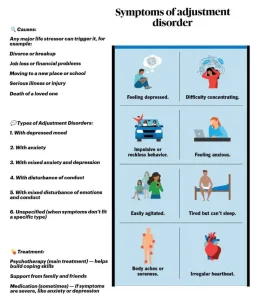
Symptoms of adjustment disorders vary depending on the person and the type of stress involved. In general, symptoms reflect excessive stress that disrupts normal functioning and emotional well-being.
Common symptoms may include:
-
Feeling sad, hopeless, or losing interest in activities once enjoyed
-
Frequent crying
-
Ongoing worry or feelings of anxiety, nervousness, or being overwhelmed
-
Irritability or difficulty managing everyday tasks
-
Trouble sleeping
-
Changes in appetite, including eating too little
-
Difficulty concentrating
-
Problems carrying out daily responsibilities
-
Pulling away from family and friends
-
Avoiding important activities such as work, school, or paying bills
-
Thoughts about suicide or engaging in suicidal behavior
Symptoms usually begin within three months of a stressful event and typically last no longer than six months after the stressor ends. If the stress continues, symptoms may also last longer.
When to see a doctor
Stressful situations are often temporary, and many people adapt over time. However, if emotional or behavioral symptoms persist or make it hard to get through daily life, it’s important to seek help.
Talk with a healthcare professional or mental health provider if symptoms continue, worsen, or interfere with relationships, work, or school. Parents should also speak with a healthcare professional if they are concerned about changes in their child’s behavior.
If you or someone else is experiencing suicidal thoughts or behavior, seek emergency help or contact a local suicide prevention hotline immediately.
Causes
Adjustment disorders develop in response to significant stressors or life changes. The way a person responds to stress can be influenced by genetics, personality traits, and past life experiences.
Stressful events can be positive or negative, sudden or ongoing. The disorder occurs when the emotional response to these events becomes overwhelming or persistent.
Risk factors
Certain life events and circumstances may increase the risk of developing an adjustment disorder:
-
Stressful experiences during childhood, such as bullying or academic difficulties
-
Divorce, separation, or ongoing relationship conflict
-
Major life changes, including retirement, childbirth, or relocation
-
Difficult experiences such as job loss, financial problems, or the death of a loved one
-
Problems at work or school
-
Exposure to life-threatening events, including assault, combat, or natural disasters
-
Long-term stressors, such as chronic illness or living in an unsafe environment
-
Experiencing multiple stressful events at the same time
-
Having other mental health conditions, such as depression, anxiety, or post-traumatic stress disorder
Complications
If adjustment disorders are not addressed, they may lead to more serious mental health conditions. Possible complications include:
-
Anxiety disorders
-
Major depressive disorder
-
Misuse of alcohol or drugs
Early recognition and treatment can reduce the risk of these complications and support emotional recovery.
Prevention
There is no guaranteed way to prevent adjustment disorders. However, certain strategies may help reduce the impact of stress:
-
Maintaining strong social support from friends and family
-
Developing healthy coping skills to manage stress
-
Practicing self-care and healthy daily habits
-
Learning ways to recover emotionally after difficult events
If you know a stressful situation is coming, such as retirement or moving, planning ahead may help. Strengthening support systems, focusing on healthy routines, and seeking guidance from a healthcare professional can make stressful transitions easier to manage.
Advertisement
