
Overview
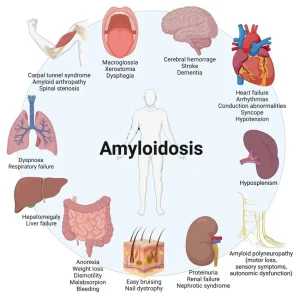
Amyloidosis is a rare disease that develops when an abnormal protein called amyloid builds up in organs and tissues. This buildup interferes with normal organ function and can lead to serious health problems. Amyloid deposits may affect one organ or multiple organs throughout the body.
Organs commonly affected by amyloidosis include the heart, kidneys, liver, spleen, nervous system, digestive tract, muscles and soft tissues. The effects of the disease depend on where amyloid accumulates and how much damage it causes.
There are several types of amyloidosis. Some types are associated with other medical conditions and may improve when the underlying condition is treated. Other types can progress and cause life-threatening organ failure. Treatment options vary and may include medications that reduce amyloid production, chemotherapy-type drugs, or organ and blood stem cell transplants in selected cases.
Symptoms
Symptoms of amyloidosis often develop slowly and may not appear until organ damage has progressed. The symptoms vary depending on which organs are affected.
Common symptoms may include:
-
Severe fatigue and weakness
-
Shortness of breath
-
Numbness, tingling or pain in the hands or feet
-
Swelling of the ankles and legs
Additional symptoms may include:
-
Dizziness or lightheadedness
-
Low blood pressure
-
Diarrhea, sometimes with blood
-
Constipation
-
Nausea and loss of appetite
-
Unintended weight loss
-
An enlarged tongue that may appear rippled along the edges
-
Skin changes such as thickening, easy bruising, or dark or purple patches around the eyes
Because symptoms are often vague, amyloidosis may be mistaken for other conditions.
When to see a doctor
See a healthcare professional if you experience persistent symptoms such as unexplained fatigue, swelling, shortness of breath, numbness or digestive problems, especially if they worsen over time or involve multiple body systems.
Causes
Amyloidosis occurs when certain proteins become unstable, misfold and clump together as amyloid deposits. These deposits accumulate in tissues and organs, disrupting normal function.
There are many different types of amyloidosis, each linked to a specific protein and underlying cause. Some forms are inherited, while others are related to chronic diseases or medical treatments.
Major types of amyloidosis include:
-
AL amyloidosis, also called immunoglobulin light chain amyloidosis, which is one of the most common forms in developed countries and often affects the heart, kidneys, liver and nerves
-
Wild-type ATTR amyloidosis, which typically affects older adults and mainly involves the heart
-
Hereditary ATTR amyloidosis, an inherited condition that can affect the nerves, heart and kidneys
-
Other rare hereditary forms, such as apolipoprotein A-1, gelsolin and fibrinogen amyloidosis
-
AA amyloidosis, also known as secondary amyloidosis, which is linked to chronic inflammatory conditions and commonly affects the kidneys
-
Localized amyloidosis, which affects only one area of the body, such as the bladder, skin or lungs, and generally has a better outlook
Correct identification of the amyloidosis type is essential for appropriate treatment.
Risk factors
Factors that may increase the risk of developing amyloidosis include:
-
Older age, as most people are diagnosed after age 50
-
Sex assigned at birth, with higher rates seen in men
-
Chronic inflammatory or infectious diseases
-
A family history of amyloidosis
-
Long-term dialysis
-
Certain genetic backgrounds, including specific inherited protein changes more common in people of African descent
Complications
Amyloidosis can lead to serious and potentially life-threatening complications due to progressive organ damage.
Possible complications include:
-
Heart damage, which can cause heart failure, abnormal heart rhythms and reduced blood circulation
-
Kidney damage that interferes with waste removal and may lead to kidney failure
-
Nervous system damage resulting in pain, numbness, digestive problems and difficulty regulating blood pressure
The severity of complications depends on the organs involved and how early the disease is diagnosed and treated.
Prevention
There is no known way to prevent amyloidosis.
For people with inherited forms or chronic inflammatory conditions, regular medical monitoring may help with early detection. Prompt evaluation of persistent or unexplained symptoms can lead to earlier diagnosis and improved management of the disease.
Advertisement
