
Overview
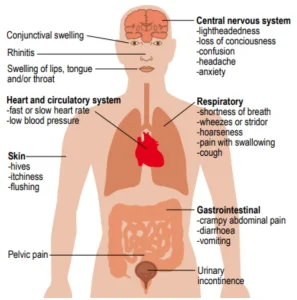
Anaphylaxis is a severe and potentially life-threatening allergic reaction that can develop rapidly. It may occur within seconds or minutes after exposure to a substance that triggers an allergy, such as certain foods, medications, insect stings or latex.
During anaphylaxis, the immune system releases a large amount of chemicals that affect the entire body. This response can cause a sudden drop in blood pressure and narrowing of the airways, making it difficult to breathe. Common warning signs include skin reactions, a rapid and weak pulse, nausea and vomiting.
Anaphylaxis is a medical emergency. Immediate treatment with an injection of epinephrine is required, followed by emergency medical care. Without prompt treatment, anaphylaxis can be fatal.
Symptoms
Symptoms of anaphylaxis usually appear within minutes of exposure to an allergen, though in some cases they may be delayed. The severity can vary, but symptoms often progress quickly.
Common symptoms include:
-
Skin reactions such as hives, itching, flushing or pale skin
-
A sudden drop in blood pressure
-
Swelling or tightening of the throat and airways, causing wheezing or difficulty breathing
-
A weak, rapid pulse
-
Nausea, vomiting or diarrhea
-
Dizziness, lightheadedness or fainting
In rare cases, symptoms may return hours later even after initial improvement. This is known as biphasic anaphylaxis.
When to see a doctor
Seek emergency medical care immediately if you or someone else experiences a severe allergic reaction. Do not wait to see if symptoms improve on their own.
If an epinephrine autoinjector is available, use it right away at the first signs of anaphylaxis. Even if symptoms improve after using epinephrine, emergency evaluation is still necessary to monitor for recurring symptoms.
If you or your child has previously experienced anaphylaxis or a severe allergic reaction, schedule an appointment with a healthcare professional. Long-term management usually involves care from a specialist in allergy and immunology.
Causes
Anaphylaxis occurs when the immune system overreacts to a substance that is typically harmless to most people. The immune system produces antibodies that trigger the release of chemicals responsible for allergic symptoms.
Even individuals who have only experienced mild allergic reactions in the past may develop anaphylaxis after future exposure to the same allergen.
Common triggers in children include food allergies, such as:
-
Peanuts and tree nuts
-
Fish and shellfish
-
Wheat, soy, sesame and milk
In adults, common triggers include:
-
Certain medications, such as antibiotics, aspirin and other pain relievers
-
Intravenous contrast dyes used in some imaging tests
-
Insect stings from bees, wasps, hornets, yellow jackets and fire ants
-
Latex
In some cases, physical activity such as exercise can trigger anaphylaxis, especially when combined with specific foods or extreme temperatures. Sometimes, no specific trigger is identified, which is referred to as idiopathic anaphylaxis.
Risk factors
While anaphylaxis can occur in anyone, certain factors may increase the risk.
Previous anaphylaxis increases the likelihood of experiencing another reaction, and future reactions may be more severe.
People with allergies or asthma have a higher risk of developing anaphylaxis. Certain medical conditions, such as heart disease or mastocytosis, may also increase risk.
Complications
Anaphylaxis is a medical emergency that can be fatal if not treated promptly. Severe reactions can lead to respiratory failure, cardiac arrest or shock due to a sudden drop in blood pressure.
Rapid recognition and treatment are critical to prevent serious outcomes.
Prevention
The most effective way to prevent anaphylaxis is to avoid known triggers whenever possible.
Steps that may help reduce risk include:
-
Avoiding substances known to cause severe allergic reactions
-
Wearing a medical alert bracelet or necklace identifying allergies
-
Carrying an emergency kit that includes prescribed medications
-
Keeping epinephrine autoinjectors accessible at all times and checking expiration dates
Additional preventive measures include informing healthcare providers of known drug allergies and taking precautions around insects if allergic to stings. People with food allergies should carefully read food labels and ask about ingredients when eating outside the home.
Being informed, prepared and having a clear emergency action plan can help ensure a rapid and effective response if anaphylaxis occurs.
Advertisement
