
Overview
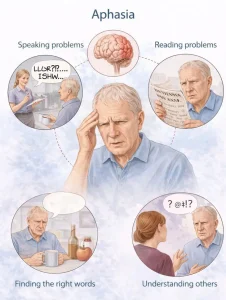
Aphasia is a disorder that affects communication. It can interfere with the ability to speak, write, and understand both spoken and written language. Aphasia most often occurs suddenly after a stroke or head injury. In some cases, it develops gradually due to a slow-growing brain tumor or a progressive neurological condition that causes ongoing damage to brain cells.
The severity of aphasia varies depending on the cause, the area of the brain affected, and the extent of the damage. Treatment focuses on addressing the underlying condition when possible and improving communication through speech and language therapy. Many people with aphasia relearn language skills and use alternative ways to communicate. Family members often play an important role in supporting communication and recovery.
Symptoms
Aphasia itself is a sign of an underlying condition, such as a stroke or brain injury. The symptoms can differ widely from person to person.
A person with aphasia may:
-
Speak in short, incomplete sentences
-
Use sentences that do not make sense
-
Replace words or sounds with incorrect ones
-
Say words that are unrecognizable
-
Have trouble finding the right words
-
Struggle to understand conversations
-
Have difficulty understanding what they read
-
Write sentences that lack meaning
Speech and language difficulties may follow certain patterns commonly described as types of aphasia. These include Broca’s aphasia, Wernicke’s aphasia, transcortical aphasia, conduction aphasia, mixed aphasia, and global aphasia. These patterns describe how well a person understands language and how easily they can speak or repeat words.
In some cases, aphasia develops slowly over time. This may be referred to as logopenic aphasia, semantic aphasia, or agrammatism. Many people experience symptoms that do not fit neatly into any single category, and each person’s communication challenges are unique.
Causes
The most common cause of aphasia is brain damage resulting from a stroke. A stroke occurs when blood flow to part of the brain is blocked or when a blood vessel ruptures, leading to damage in areas responsible for language.
Other possible causes include severe head injuries, brain tumors, infections, and degenerative neurological diseases. In these situations, aphasia often occurs alongside other cognitive difficulties, such as memory loss or confusion.
Primary progressive aphasia is a form of aphasia that develops gradually due to ongoing degeneration of brain cells involved in language. Over time, this condition may progress and lead to more widespread cognitive decline.
Temporary episodes of aphasia can also occur. These may be linked to migraines, seizures, or a transient ischemic attack, also known as a TIA. A TIA involves a brief interruption of blood flow to the brain and increases the risk of a future stroke.
Risk factors
Factors that increase the risk of aphasia are largely related to conditions that affect brain health. These include:
-
Stroke or transient ischemic attack
-
Traumatic brain injury
-
Brain tumors or infections
-
Degenerative neurological diseases
-
Cardiovascular risk factors such as high blood pressure and diabetes
Managing these conditions can help reduce the risk of aphasia.
Complications
Aphasia can significantly affect quality of life because communication plays a central role in daily activities. Communication difficulties may impact:
-
Work and career responsibilities
-
Personal and social relationships
-
Independence in daily tasks
Difficulty expressing needs and thoughts can lead to frustration, embarrassment, social isolation, and depression. Aphasia may also occur alongside other challenges, such as movement problems, memory impairment, and difficulties with thinking and problem-solving.
Prevention
Not all cases of aphasia can be prevented, but reducing the risk of stroke and brain injury can lower the likelihood of developing it. Steps that may help include:
-
Managing blood pressure, cholesterol, and blood sugar levels
-
Avoiding smoking and limiting alcohol use
-
Wearing protective headgear during activities with a risk of head injury
-
Seeking prompt medical care for stroke symptoms
Early treatment of underlying health conditions and fast response to neurological symptoms can reduce the severity of aphasia and improve long-term outcomes.
Advertisement
