
Overview
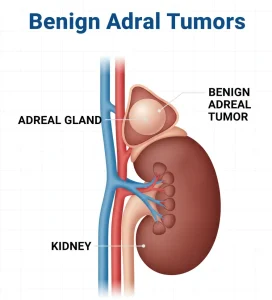
Benign adrenal tumors are noncancerous growths that develop in one or both adrenal glands. The adrenal glands are small organs located on top of each kidney and play a key role in producing hormones that regulate blood pressure, metabolism, stress response, and electrolyte balance. Many benign adrenal tumors are discovered incidentally during imaging tests done for other reasons and are often referred to as adrenal incidentalomas.
These tumors may be nonfunctioning, meaning they do not produce excess hormones, or functioning, meaning they secrete hormones that can cause noticeable symptoms. Most benign adrenal tumors grow slowly and do not spread to other parts of the body.
Symptoms
Symptoms depend on whether the tumor produces hormones and which hormones are affected. Many people have no symptoms at all.
Possible symptoms include:
-
High blood pressure that is difficult to control
-
Unexplained weight gain or weight loss
-
Muscle weakness or fatigue
-
Changes in blood sugar levels
-
Headaches or excessive sweating
-
Anxiety or heart palpitations
-
Easy bruising or skin changes
Nonfunctioning tumors typically cause no symptoms unless they grow large enough to press on nearby structures.
Causes
The exact cause of benign adrenal tumors is not well understood. In many cases, they develop without an identifiable trigger.
Possible contributing factors include:
-
Spontaneous abnormal growth of adrenal cells
-
Genetic factors in rare inherited conditions
-
Age-related changes in adrenal tissue
These tumors are not caused by lifestyle choices and are not contagious.
Risk factors
Certain factors increase the likelihood of developing benign adrenal tumors.
Risk factors include:
-
Increasing age, especially over 50 years
-
Presence of certain genetic syndromes
-
History of hormonal disorders
-
Incidental detection during imaging studies for other conditions
Most benign adrenal tumors occur in people with no known risk factors.
Complications
Although benign, these tumors can lead to complications, particularly if they produce hormones.
Possible complications include:
-
Persistent high blood pressure
-
Diabetes or worsening blood sugar control
-
Hormonal imbalances affecting multiple body systems
-
Heart and blood vessel problems due to excess hormones
-
Rare transformation into malignant tumors
Regular monitoring helps reduce the risk of complications.
Prevention
There is no known way to prevent benign adrenal tumors. Management focuses on early detection and appropriate follow-up.
Helpful measures include:
-
Regular medical checkups if a tumor is detected
-
Hormone testing as recommended by a healthcare provider
-
Imaging follow-up to monitor tumor size
-
Managing blood pressure, blood sugar, and other hormone-related conditions
-
Seeking medical advice if new symptoms develop
With proper evaluation and monitoring, most benign adrenal tumors can be managed safely without surgery.
Advertisement
