
Overview
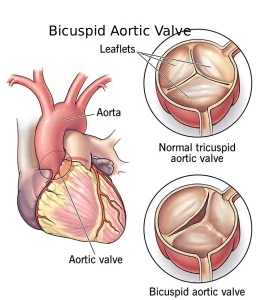
Bicuspid aortic valve is a congenital heart condition in which the aortic valve has two leaflets instead of the normal three. The aortic valve controls blood flow from the heart’s left ventricle into the aorta, the main artery that supplies oxygen-rich blood to the body. Having two leaflets can affect how well the valve opens and closes.
Many people with bicuspid aortic valve are born with the condition and may not experience symptoms for years. Over time, the valve may become narrowed or leaky, leading to heart-related complications if not monitored.
Symptoms
Symptoms may not appear until adolescence or adulthood and often depend on the severity of valve dysfunction.
Possible symptoms include:
-
Shortness of breath, especially during physical activity
-
Chest pain or discomfort
-
Fatigue
-
Dizziness or lightheadedness
-
Fainting episodes
-
Heart palpitations
Some individuals remain symptom-free and are diagnosed during routine examinations or imaging tests.
Causes
Bicuspid aortic valve develops before birth as the heart forms. The exact cause is not fully understood.
Possible contributing factors include:
-
Genetic influences affecting heart development
-
Abnormal formation of the aortic valve during fetal growth
The condition is present at birth and is not caused by lifestyle factors or infections.
Risk factors
Certain factors increase the likelihood of having a bicuspid aortic valve.
Risk factors include:
-
Family history of bicuspid aortic valve or other congenital heart defects
-
Male sex, as the condition is more common in men
-
Genetic conditions affecting connective tissue
First-degree relatives of affected individuals may have a higher risk.
Complications
Bicuspid aortic valve can lead to complications, particularly as a person ages.
Possible complications include:
-
Aortic valve stenosis or narrowing
-
Aortic valve regurgitation or leakage
-
Enlargement of the aorta
-
Increased risk of aortic aneurysm or dissection
-
Heart failure in advanced cases
-
Increased risk of infective endocarditis
Regular monitoring helps detect complications early.
Prevention
There is no way to prevent bicuspid aortic valve because it is a congenital condition. Management focuses on monitoring and reducing the risk of complications.
Helpful measures include:
-
Regular follow-up with a cardiologist
-
Periodic imaging of the heart and aorta
-
Managing blood pressure and cholesterol
-
Maintaining a heart-healthy lifestyle
-
Seeking medical attention for new or worsening symptoms
With proper care and monitoring, many people with bicuspid aortic valve live full and active lives.
Request an appointment
Advertisement
