
Overview
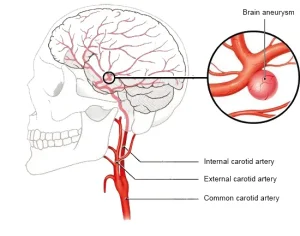
A brain aneurysm is a bulge or ballooning in a blood vessel in the brain caused by a weakened area in the vessel wall. Many brain aneurysms are small and do not cause symptoms. However, if an aneurysm leaks or ruptures, it can cause bleeding in or around the brain, which is a life-threatening medical emergency. Early detection and appropriate treatment can reduce the risk of complications.
Symptoms
Symptoms depend on whether the aneurysm is unruptured, leaking, or ruptured.
Unruptured aneurysms may cause no symptoms. When symptoms occur, they may include:
• Pain above or behind the eye
• Dilated pupil
• Changes in vision or double vision
• Numbness or weakness on one side of the face
• Difficulty speaking
A ruptured aneurysm usually causes sudden and severe symptoms:
• Sudden, extremely severe headache often described as the worst headache of life
• Nausea and vomiting
• Stiff neck
• Sensitivity to light
• Loss of consciousness
• Seizures
Causes
The exact cause of brain aneurysms is not always known, but several factors can weaken blood vessel walls over time.
• Congenital weaknesses in blood vessel walls
• High blood pressure
• Smoking
• Atherosclerosis
• Head trauma
• Certain blood infections
• Drug use, especially cocaine
Risk factors
Some factors increase the likelihood of developing a brain aneurysm or experiencing rupture.
• Family history of brain aneurysms
• Age over 40
• Female sex
• Chronic high blood pressure
• Smoking or tobacco use
• Heavy alcohol consumption
• Certain inherited connective tissue disorders
Complications
A ruptured brain aneurysm can cause serious and sometimes permanent complications.
• Bleeding in the brain or surrounding tissues
• Stroke due to reduced blood flow or vessel spasm
• Brain damage
• Hydrocephalus caused by fluid buildup in the brain
• Cognitive, speech, or movement problems
• Death in severe cases
Prevention
Not all brain aneurysms can be prevented, but healthy lifestyle choices can lower the risk of formation and rupture.
• Control high blood pressure
• Avoid smoking and exposure to secondhand smoke
• Limit alcohol consumption
• Avoid illicit drug use
• Maintain a healthy diet and regular physical activity
• Seek medical advice if there is a strong family history of brain aneurysms
Advertisement
