
Overview
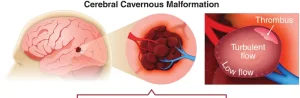
Cavernous malformations, also known as cavernous angiomas or cavernomas, are abnormal clusters of small blood vessels with thin walls that form in the brain, spinal cord, or other parts of the body. These vessels are enlarged and irregular, creating blood-filled spaces that can leak or bleed slowly over time. Cavernous malformations may be present at birth or develop later in life and can occur as a single lesion or multiple lesions, especially in inherited forms. Many people remain asymptomatic, while others develop neurological symptoms depending on the location and behavior of the malformation.
Symptoms
Symptoms of cavernous malformations vary widely and depend on their size, location, and whether bleeding has occurred.
Common symptoms include:
-
Headaches
-
Seizures
-
Weakness or numbness in parts of the body
-
Balance or coordination problems
-
Vision changes
-
Speech difficulties
If bleeding occurs, symptoms may suddenly worsen and can resemble those of a stroke.
Causes
Cavernous malformations develop due to abnormal formation of blood vessel walls. They can occur sporadically or as part of a genetic condition.
Main causes include:
-
Congenital abnormalities in blood vessel development
-
Inherited genetic mutations in familial cases
-
Formation after brain or spinal cord injury in rare cases
In many individuals, the exact cause remains unknown.
Risk Factors
Certain factors increase the likelihood of developing cavernous malformations or experiencing symptoms.
Key risk factors include:
-
Family history of cavernous malformations
-
Presence of multiple lesions
-
Prior bleeding from a cavernous malformation
-
Lesions located in the brainstem or spinal cord
Age and sex do not strongly influence risk, and the condition can occur at any stage of life.
Complications
Cavernous malformations can lead to serious neurological complications, particularly if bleeding recurs.
Possible complications include:
-
Recurrent brain or spinal cord hemorrhages
-
Chronic seizures
-
Permanent neurological deficits
-
Progressive weakness or sensory loss
-
Reduced quality of life
The severity of complications depends on the frequency of bleeding and the affected area of the nervous system.
Prevention
There is no proven way to prevent cavernous malformations, especially those present at birth. However, steps can be taken to reduce the risk of complications.
Preventive approaches include:
-
Regular medical monitoring and imaging when recommended
-
Managing seizure disorders effectively
-
Avoiding medications that increase bleeding risk unless medically necessary
-
Seeking early medical evaluation for new or worsening neurological symptoms
Early diagnosis and appropriate follow-up care play an important role in minimizing complications and maintaining neurological function.
Advertisement
