
Overview
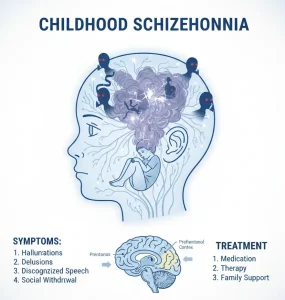
Childhood schizophrenia is a rare and severe mental health disorder characterized by abnormal thoughts, perceptions, emotions, and behavior that begin during childhood or early adolescence. It is considered an early-onset form of schizophrenia and significantly affects a child’s ability to think clearly, manage emotions, relate to others, and function in daily life. The condition often has a chronic course and requires long-term medical and psychological care.
Symptoms
Symptoms of childhood schizophrenia usually develop gradually and may worsen over time. They can be divided into positive, negative, and cognitive symptoms.
Common symptoms include:
-
Hallucinations, such as hearing voices
-
Delusions or false beliefs not based in reality
-
Disorganized speech or behavior
-
Social withdrawal and isolation
-
Reduced emotional expression
Other possible symptoms include:
-
Delayed language or motor development
-
Difficulty concentrating or thinking clearly
-
Poor academic performance
-
Sleep disturbances
-
Irritability or unusual fearfulness
Causes
The exact cause of childhood schizophrenia is not fully understood, but it is believed to result from a combination of genetic, biological, and environmental factors.
Major contributing causes include:
-
Genetic predisposition and family history of schizophrenia
-
Abnormal brain development or structure
-
Imbalances in brain chemicals such as dopamine
-
Complications during pregnancy or birth
-
Exposure to infections or significant stress early in life
No single factor alone is responsible for the development of the disorder.
Risk Factors
Certain factors may increase the risk of developing childhood schizophrenia.
Key risk factors include:
-
Family history of schizophrenia or other psychotic disorders
-
Advanced parental age
-
Prenatal exposure to infections, malnutrition, or toxins
-
Childhood trauma or severe psychosocial stress
-
Neurodevelopmental delays
These factors increase risk but do not guarantee that the condition will occur.
Complications
Childhood schizophrenia can lead to serious long-term complications if not properly managed.
Potential complications include:
-
Impaired academic and social development
-
Difficulty maintaining relationships
-
Increased risk of anxiety or depression
-
Behavioral problems
-
Substance misuse in later life
-
Increased risk of self-harm or suicidal thoughts
Early diagnosis and ongoing treatment are critical to reducing the severity of complications.
Prevention
There is no proven way to prevent childhood schizophrenia, but early recognition and intervention can improve outcomes.
Preventive and supportive strategies include:
-
Early evaluation of developmental or behavioral concerns
-
Prompt mental health assessment when symptoms appear
-
Ongoing medical and psychological care
-
Family education and support
-
Reducing stressors and maintaining a stable environment
Timely intervention and comprehensive care can help children with schizophrenia achieve better long-term functioning and quality of life.
Request an appointment
Advertisement
