
Overview
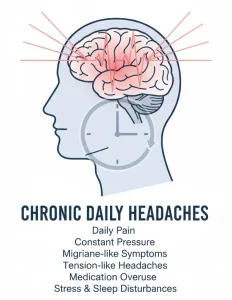
Chronic daily headaches refer to a group of headache disorders in which a person experiences headaches on 15 or more days per month for at least three months. Rather than being a single diagnosis, chronic daily headaches include several headache types, most commonly chronic migraine and chronic tension-type headache. These headaches can significantly interfere with daily activities, work productivity, and overall quality of life.
Symptoms
Symptoms of chronic daily headaches vary depending on the underlying headache type, but the pain is frequent and often persistent.
Common symptoms include:
-
Headache occurring most days of the month
-
Dull, aching, or tightening head pain
-
Pressure or tightness around the forehead or back of the head
-
Sensitivity to light or sound
-
Nausea in some cases
Additional symptoms may include:
-
Throbbing pain
-
Neck or shoulder muscle tension
-
Difficulty concentrating
-
Fatigue
-
Worsening headache with physical activity
Causes
Chronic daily headaches often develop from episodic headaches that become more frequent over time. The exact cause is not always clear, but several factors contribute to their development.
Common causes include:
-
Chronic migraine progression
-
Tension-type headaches
-
Overuse of pain-relief medications
-
Stress and anxiety
-
Sleep disturbances
-
Poor posture or muscle strain
-
Underlying neurological sensitivity
Risk Factors
Certain factors increase the likelihood of developing chronic daily headaches.
Key risk factors include:
-
History of frequent migraines or tension headaches
-
Overuse of headache medications
-
High stress levels
-
Anxiety or depression
-
Obesity
-
Poor sleep habits
-
Female sex
These factors may contribute to headache persistence and severity.
Complications
Chronic daily headaches can lead to physical, emotional, and social complications if not properly managed.
Possible complications include:
-
Medication overuse headache
-
Reduced work or school performance
-
Anxiety and depression
-
Sleep disorders
-
Decreased quality of life
-
Social withdrawal
Long-term pain can significantly impact mental and emotional well-being.
Prevention
Preventing chronic daily headaches focuses on managing triggers, lifestyle changes, and appropriate medical care.
Preventive strategies include:
-
Limiting the use of pain-relief medications
-
Identifying and avoiding headache triggers
-
Managing stress through relaxation techniques
-
Maintaining regular sleep patterns
-
Staying physically active
-
Maintaining good posture and ergonomic habits
-
Following a treatment plan recommended by a healthcare provider
Early intervention and consistent management can reduce headache frequency and improve long-term outcomes.
Advertisement
