
Overview
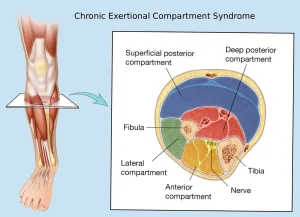
Chronic exertional compartment syndrome is a condition characterized by increased pressure within a muscle compartment during physical activity, leading to pain and reduced blood flow to the affected muscles and nerves. It most commonly affects the lower legs and is often seen in athletes or individuals who engage in repetitive, high-impact activities such as running. Symptoms typically develop during exercise and resolve with rest, distinguishing it from acute compartment syndrome, which is a medical emergency.
Symptoms
Symptoms usually appear after a predictable duration or intensity of exercise and improve shortly after stopping the activity.
Common symptoms include:
-
Aching, tightness, or cramping pain in the affected muscle
-
Sensation of pressure or fullness in the limb
-
Pain that worsens with continued exercise and subsides with rest
Other possible symptoms include:
-
Numbness or tingling
-
Weakness in the affected limb
-
Reduced coordination or foot drop in severe cases
Symptoms often recur when activity is resumed.
Causes
Chronic exertional compartment syndrome occurs when muscle volume increases during exercise but the surrounding fascia does not expand adequately. This leads to increased pressure within the compartment, reducing blood flow and nerve function.
Contributing causes include:
-
Repetitive physical activity
-
Muscle swelling during exercise
-
Tight or inelastic fascia
-
Biomechanical abnormalities affecting movement
The condition is not caused by trauma and develops gradually over time.
Risk Factors
Certain individuals are more likely to develop chronic exertional compartment syndrome.
Key risk factors include:
-
Participation in high-impact or repetitive sports
-
Young adults and adolescents
-
Sudden increases in exercise intensity or duration
-
Poor footwear or training surfaces
-
Abnormal gait or muscle imbalances
Both recreational and professional athletes can be affected.
Complications
If left untreated, chronic exertional compartment syndrome can interfere with physical activity and quality of life.
Possible complications include:
-
Persistent exercise-related pain
-
Decreased athletic performance
-
Nerve compression leading to weakness or sensory changes
-
Avoidance of physical activity due to discomfort
Unlike acute compartment syndrome, it rarely causes permanent tissue damage but can become chronic and limiting.
Prevention
While not always preventable, certain strategies may help reduce the risk or severity of symptoms.
Preventive measures include:
-
Gradual progression of exercise intensity
-
Adequate warm-up and stretching routines
-
Wearing appropriate footwear
-
Cross-training to reduce repetitive stress
-
Addressing biomechanical issues with professional guidance
Early recognition of symptoms and modification of activity can help prevent worsening and support continued physical activity.
Request an appointment
Advertisement
