
Overview
A cold sore, also known as a fever blister, is a small, fluid-filled blister that typically appears on or around the lips. It is caused by the herpes simplex virus (usually HSV-1) and is highly contagious, spreading through close personal contact, such as kissing or sharing utensils.
Cold sores often recur because the virus remains dormant in nerve cells and can be reactivated by triggers such as stress, illness, or sun exposure. While usually harmless in healthy individuals, they can cause discomfort and cosmetic concerns.
Symptoms
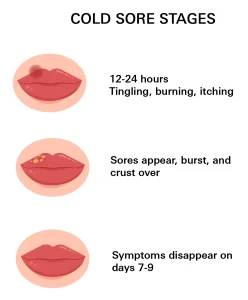
Cold sores usually develop in stages, with each stage lasting a few days.
Common symptoms include:
-
Tingling, itching, or burning sensation around the lips before the blister appears
-
Small, painful fluid-filled blisters on or around the lips
-
Swelling and redness in the affected area
-
Blisters that break and ooze, forming a crust
-
Mild fever, fatigue, or swollen lymph nodes in some cases
-
Recurrent outbreaks in the same area
Symptoms typically resolve within 7–10 days without treatment, though the virus remains in the body.
Causes
Cold sores are caused by infection with the herpes simplex virus (HSV), usually type 1 (HSV-1). The virus spreads through direct contact with an infected person.
Key points about causes include:
-
Transmission through kissing, sharing utensils, or other close contact
-
Reactivation triggered by stress, illness, sunlight, hormonal changes, or weakened immunity
-
Primary infection may occur in childhood or adulthood
Cold sores are not caused by poor hygiene or food.
Risk Factors
Certain factors increase the likelihood of developing cold sores or experiencing frequent outbreaks.
These include:
-
Previous exposure to HSV-1
-
Weakened immune system
-
Stress or fatigue
-
Fever or illness
-
Excessive sun exposure
-
Hormonal changes, such as during menstruation
Recurrence risk varies among individuals.
Complications
Cold sores are usually mild, but complications can occur, especially in people with weakened immune systems.
Possible complications include:
-
Secondary bacterial infections at the site of the sore
-
Eye infections (herpetic keratitis) if the virus spreads to the eyes
-
Severe or prolonged outbreaks in immunocompromised individuals
-
Rare complications such as encephalitis
Proper care and hygiene reduce the risk of complications.
Prevention
Cold sores cannot be completely prevented because the virus remains in the body, but recurrence and spread can be minimized.
Preventive strategies include:
-
Avoiding direct contact with active sores
-
Not sharing utensils, towels, or lip products
-
Using sunscreen or lip balm with SPF to prevent sun-triggered outbreaks
-
Managing stress and maintaining a healthy immune system
-
Antiviral medications for people with frequent or severe outbreaks
Early treatment at the first sign of tingling or burning can reduce the severity and duration of cold sores.
Advertisement
