
Overview
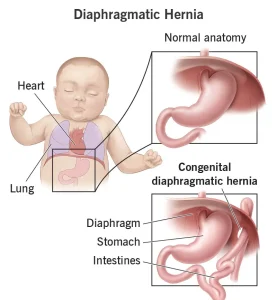
Congenital diaphragmatic hernia (CDH) is a birth defect in which an opening in the diaphragm allows abdominal organs, such as the stomach, intestines, or liver, to move into the chest cavity during fetal development. This displacement interferes with normal lung growth, often leading to underdeveloped lungs and breathing difficulties after birth. CDH is usually present at birth and can range from mild to life-threatening.
Symptoms
Symptoms of congenital diaphragmatic hernia typically appear shortly after birth, though severity varies. Common symptoms include:
-
Severe breathing difficulty or rapid breathing
-
Blue discoloration of the lips or skin due to low oxygen levels
-
Fast heart rate
-
Abnormally shaped chest or asymmetrical chest movement
-
Sunken abdomen due to displaced abdominal organs
-
Poor oxygen levels despite breathing support
Causes
The exact cause of congenital diaphragmatic hernia is not always known. It occurs when the diaphragm fails to form completely during early fetal development. Genetic factors, environmental influences, and disruptions during embryonic growth may all contribute. In some cases, CDH is associated with chromosomal abnormalities or other congenital anomalies.
Risk Factors
Factors that may increase the risk of congenital diaphragmatic hernia include:
-
Family history of CDH
-
Certain genetic syndromes or chromosomal conditions
-
Maternal exposure to specific medications or environmental factors during pregnancy
-
Poorly controlled maternal health conditions
-
Unknown developmental factors during early pregnancy
Complications
Congenital diaphragmatic hernia can lead to serious complications, especially in severe cases:
-
Pulmonary hypoplasia, or underdeveloped lungs
-
Persistent pulmonary hypertension of the newborn
-
Chronic lung disease
-
Feeding difficulties and poor growth
-
Gastroesophageal reflux
-
Developmental delays in survivors
Prevention
There is no guaranteed way to prevent congenital diaphragmatic hernia. However, certain measures may reduce risks or improve outcomes:
-
Early prenatal care and routine ultrasound screening
-
Avoidance of harmful substances during pregnancy
-
Genetic counseling when there is a family history of CDH
-
Delivery at a specialized medical center with neonatal intensive care support
Request an appointment
Advertisement
