
Overview
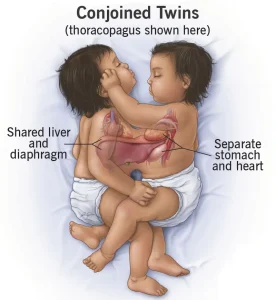
Conjoined twins are a rare congenital condition in which identical twins are physically connected to each other at birth. This occurs when a single fertilized egg only partially separates during early embryonic development. Conjoined twins are always identical and share some body structures or organs, with the extent of connection varying widely. The condition is rare and presents complex medical, surgical, and ethical challenges.
Symptoms
The features of conjoined twins depend on the area and extent of physical connection. Common characteristics may include:
-
Physical connection at the chest, abdomen, pelvis, spine, or head
-
Shared organs such as the liver, heart, or intestines in some cases
-
Limited or restricted movement depending on the point of attachment
-
Difficulty with breathing or feeding if vital organs are shared
-
Differences in size or strength between the twins
-
Visible anatomical abnormalities detected at birth
Causes
Conjoined twins result from incomplete separation of a single fertilized egg during the early stages of pregnancy, typically within the first two weeks after conception. The exact reason why the separation does not fully occur is unknown. Genetic factors are not usually considered the direct cause, and the condition is generally considered a sporadic developmental event.
Risk Factors
There are no well-established risk factors for conjoined twins, but certain associations have been observed:
-
Identical twin pregnancy
-
Female sex, as conjoined twins are more commonly female
-
No clear link to maternal age, lifestyle, or environmental exposure
-
Occurrence appears random and is not typically inherited
Complications
Conjoined twins often face significant medical challenges, which may include:
-
Life-threatening organ dysfunction
-
Difficulty feeding, breathing, or moving independently
-
Increased risk of infections
-
Surgical risks associated with separation procedures
-
Developmental delays
-
Emotional, psychological, and social challenges for the twins and family
Prevention
There is no known way to prevent conjoined twins, as the condition arises from early embryonic development. However, early detection can help prepare for medical care and decision-making:
-
Prenatal ultrasound and imaging for early diagnosis
-
Delivery planning at a specialized medical center
-
Multidisciplinary medical and surgical evaluation
-
Ongoing support and counseling for families
Request an appointment
Advertisement
