
Overview
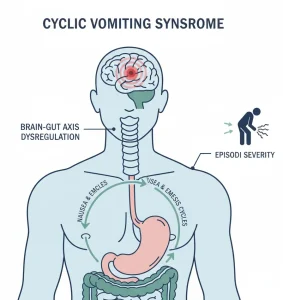
Cyclic vomiting syndrome is a disorder characterized by repeated episodes of severe nausea and vomiting that occur in a predictable pattern. These episodes are separated by periods of normal health with no symptoms. Cyclic vomiting syndrome most often begins in childhood but can also affect adults. The condition can significantly disrupt daily life and may be associated with migraines and other neurological or gastrointestinal disorders.
Symptoms
Symptoms of cyclic vomiting syndrome occur in distinct phases and can vary in intensity and duration.
Common symptoms include:
-
Recurrent episodes of intense nausea and vomiting
-
Vomiting that occurs multiple times per hour during episodes
-
Abdominal pain
-
Pale skin and sweating
-
Extreme fatigue or lethargy
-
Sensitivity to light or sound
-
Headaches or migraine-like symptoms
-
Dehydration due to fluid loss
Between episodes, individuals usually feel completely well.
Causes
The exact cause of cyclic vomiting syndrome is not fully understood, but it is believed to involve abnormal brain-gut interaction.
Possible contributing factors include:
-
Migraine-related mechanisms
-
Abnormal functioning of the autonomic nervous system
-
Genetic predisposition
-
Hormonal changes
-
Triggers such as stress, infections, certain foods, or lack of sleep
The condition is not caused by infections or food poisoning.
Risk factors
Certain factors increase the likelihood of developing cyclic vomiting syndrome.
Risk factors include:
-
Family history of migraines or cyclic vomiting syndrome
-
Personal history of migraines
-
Childhood onset
-
High levels of psychological stress
-
Certain triggers such as motion sickness or sleep deprivation
Both children and adults can be affected.
Complications
Frequent or severe episodes of cyclic vomiting syndrome can lead to complications if not properly managed.
Possible complications include:
-
Dehydration and electrolyte imbalances
-
Damage to the esophagus from repeated vomiting
-
Dental erosion
-
Malnutrition or weight loss
-
Anxiety related to fear of future episodes
-
Hospitalization during severe attacks
Early treatment helps reduce episode severity and prevent complications.
Prevention
While cyclic vomiting syndrome cannot always be prevented, identifying and avoiding triggers may reduce episode frequency.
Preventive strategies include:
-
Managing stress through relaxation techniques
-
Maintaining regular sleep patterns
-
Avoiding known dietary or environmental triggers
-
Treating migraines effectively
-
Following prescribed preventive medications when recommended
-
Regular medical follow-up to adjust management plans
Consistent preventive care can help improve quality of life for individuals with cyclic vomiting syndrome.
Request an appointment
Advertisement
