
Overview
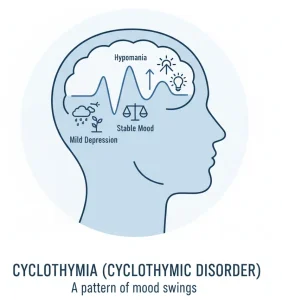
Cyclothymia, also known as cyclothymic disorder, is a chronic mood disorder characterized by ongoing fluctuations between mild depressive symptoms and periods of elevated mood. These mood changes are less severe than those seen in bipolar disorder but are persistent and can last for years. Cyclothymia typically begins in adolescence or early adulthood and can affect daily functioning, relationships, and emotional well-being if not recognized and managed.
Symptoms
Symptoms of cyclothymia involve alternating mood states that occur over long periods of time.
Common symptoms include:
-
Periods of low mood, sadness, or lack of motivation
-
Reduced energy or fatigue during low phases
-
Feelings of hopelessness or low self-esteem
-
Periods of elevated mood or increased optimism
-
Increased energy, talkativeness, or productivity
-
Decreased need for sleep during high moods
-
Impulsivity or risk-taking behaviors
-
Mood instability that lasts for at least two years in adults
Symptoms are milder than major depression or mania but are more frequent and long-lasting.
Causes
The exact cause of cyclothymia is not fully understood, but it is believed to result from a combination of biological and environmental factors.
Possible contributing causes include:
-
Genetic predisposition to mood disorders
-
Imbalances in brain chemicals that regulate mood
-
Abnormal brain circuitry involved in emotional control
-
Stressful life events or ongoing psychological stress
-
Early life trauma in some individuals
No single factor alone is responsible for the condition.
Risk factors
Certain factors increase the likelihood of developing cyclothymia.
Risk factors include:
-
Family history of bipolar disorder or other mood disorders
-
Onset during adolescence or early adulthood
-
Chronic stress or emotionally unstable environments
-
History of anxiety or other mental health conditions
-
Substance use, which may worsen mood instability
Both men and women are affected equally.
Complications
If untreated, cyclothymia can lead to significant emotional and functional difficulties.
Possible complications include:
-
Increased risk of developing bipolar disorder
-
Relationship or occupational problems
-
Poor academic or work performance
-
Substance misuse as a coping mechanism
-
Anxiety disorders
-
Reduced quality of life due to ongoing mood instability
Early diagnosis and consistent management can help reduce these risks.
Prevention
There is no guaranteed way to prevent cyclothymia, but early recognition and ongoing care can improve outcomes.
Preventive strategies include:
-
Seeking early mental health evaluation for persistent mood changes
-
Adhering to recommended therapy and treatment plans
-
Managing stress through healthy coping strategies
-
Maintaining regular sleep and daily routines
-
Avoiding alcohol and recreational drug use
-
Regular follow-up with mental health professionals
Long-term support and monitoring play an important role in maintaining emotional stability.
Advertisement
