
Overview
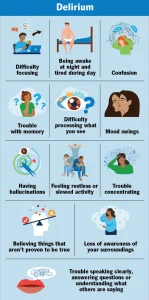
Delirium is a sudden and severe disturbance in mental abilities that results in confusion, reduced awareness of the environment, and impaired attention. It usually develops over a short period of time and tends to fluctuate throughout the day. Delirium is most commonly seen in older adults, particularly during hospitalization or serious illness, and is considered a medical emergency requiring prompt evaluation.
Symptoms
Symptoms of delirium can vary in type and severity and often change rapidly:
-
Sudden confusion or disorientation
-
Difficulty focusing or maintaining attention
-
Altered level of consciousness
-
Memory problems
-
Disorganized thinking or speech
-
Hallucinations or delusions
-
Sleep–wake cycle disturbances
-
Agitation or restlessness, or alternatively, lethargy
Causes
Delirium is usually caused by an underlying medical condition or multiple contributing factors:
-
Infections such as urinary tract or lung infections
-
Dehydration or electrolyte imbalances
-
Medication side effects or withdrawal
-
Surgery or anesthesia
-
Severe illness or organ failure
-
Alcohol or drug intoxication or withdrawal
-
Pain or untreated medical conditions
Risk Factors
Certain individuals are more vulnerable to developing delirium:
-
Older age
-
Pre-existing dementia or cognitive impairment
-
Hospitalization or intensive care admission
-
Sensory impairment such as vision or hearing loss
-
Multiple chronic medical conditions
-
Use of multiple medications
Complications
Delirium can lead to serious short- and long-term complications:
-
Increased risk of falls and injuries
-
Prolonged hospital stay
-
Functional decline
-
Long-term cognitive impairment
-
Increased risk of institutionalization
-
Higher mortality rates
Prevention
Preventive strategies focus on addressing risk factors and maintaining cognitive stability:
-
Ensuring adequate hydration and nutrition
-
Managing pain effectively
-
Reviewing medications regularly
-
Promoting regular sleep–wake cycles
-
Providing orientation cues such as clocks and calendars
-
Encouraging mobility and early rehabilitation
-
Prompt treatment of infections or medical conditions
Advertisement
