
Overview
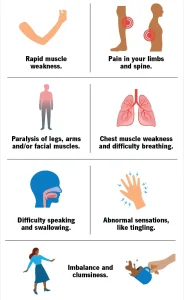
Guillain-Barre Syndrome (GBS) is a rare neurological disorder in which the body’s immune system attacks the peripheral nerves. This can lead to muscle weakness, numbness, and, in severe cases, paralysis. GBS can develop suddenly and progress rapidly over days to weeks. Although the exact cause is unknown, it often follows a bacterial or viral infection. Most individuals recover fully, but some may experience long-term complications.
Symptoms
-
Tingling or numbness in the hands and feet
-
Muscle weakness starting in the legs and spreading to the arms and upper body
-
Difficulty walking or climbing stairs
-
Loss of reflexes
-
Severe cases may involve difficulty breathing or swallowing
-
Rapid heart rate or blood pressure fluctuations
-
Pain or cramps, particularly at night
Causes
GBS is an autoimmune disorder, meaning the immune system mistakenly attacks the peripheral nerves. Common triggers include:
-
Respiratory or gastrointestinal infections, such as Campylobacter jejuni
-
Influenza or other viral infections
-
Surgery or trauma in rare cases
-
Vaccinations in very rare cases
Risk factors
-
Recent infection, especially respiratory or gastrointestinal
-
Age: Older adults have a higher risk of severe disease
-
Gender: Slightly more common in males than females
-
Certain infections, including Campylobacter, cytomegalovirus, Epstein-Barr virus, or Zika virus
Complications
-
Respiratory failure if breathing muscles are affected
-
Blood clots due to immobility
-
Heart rhythm problems and blood pressure fluctuations
-
Long-term muscle weakness or numbness in some patients
-
Relapses in rare cases
Prevention
-
There is no guaranteed way to prevent GBS
-
Prompt treatment of infections may reduce risk
-
Early medical attention if symptoms of tingling or weakness appear after an infection
-
Vaccination precautions under medical guidance in individuals with previous GBS
Timely diagnosis and treatment, including intravenous immunoglobulin (IVIG) or plasma exchange, can significantly improve recovery and reduce the risk of complications in Guillain-Barre Syndrome.
Advertisement
