
Overview
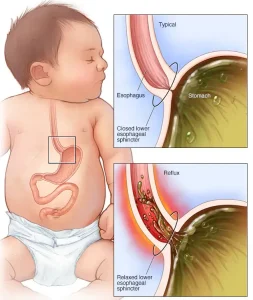
Infant reflux, also known as gastroesophageal reflux (GER), occurs when stomach contents flow back into the esophagus. This happens because the muscle between the esophagus and stomach is still developing in infants. Reflux is very common in babies, especially in the first few months of life, and usually resolves on its own as the digestive system matures.
Symptoms
-
Frequent spitting up or regurgitation
-
Vomiting after feeds
-
Irritability or fussiness during or after feeding
-
Arching of the back while feeding
-
Coughing, gagging, or hiccups
-
Poor sleep in some infants
-
Slow weight gain in more severe cases
Causes
Infant reflux occurs due to immaturity of the lower esophageal sphincter. Contributing factors include:
-
Liquid-based diet
-
Spending much time lying flat
-
Overfeeding
-
Swallowing air during feeding
-
Premature birth
Risk factors
-
Age under 6 months
-
Premature birth
-
Exposure to secondhand smoke
-
Feeding difficulties or improper feeding techniques
Complications
-
Feeding problems or refusal to eat
-
Poor weight gain
-
Esophagitis due to repeated acid exposure
-
Breathing problems if stomach contents are inhaled
-
Development of gastroesophageal reflux disease (GERD) in severe cases
Prevention
-
Feeding smaller amounts more frequently
-
Burping the baby during and after feeds
-
Keeping the infant upright for 20–30 minutes after feeding
-
Avoiding overfeeding
-
Ensuring proper latch during breastfeeding or correct bottle positioning
-
Following medical advice if symptoms are severe or persistent
Most infants outgrow reflux by 12 to 18 months of age. Medical evaluation is recommended if symptoms are severe, persistent, or associated with poor growth or breathing difficulties.
Advertisement
