
Overview
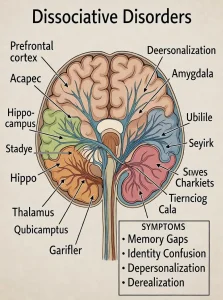
Dissociative disorders are a group of mental health conditions characterized by a disruption in the normal integration of consciousness, memory, identity, emotion, perception, or behavior. These disorders are often associated with trauma and serve as a psychological coping mechanism in response to overwhelming stress. The severity and presentation vary widely among individuals.
Symptoms
Symptoms depend on the specific type of dissociative disorder and may fluctuate over time:
-
Memory gaps or amnesia for personal information or events
-
Feeling detached from oneself or surroundings
-
Sense of identity confusion or identity changes
-
Distorted perception of time or reality
-
Emotional numbness
-
Difficulty recalling traumatic experiences
-
Anxiety or depression symptoms
-
Problems with daily functioning
Causes
Dissociative disorders are primarily linked to psychological trauma:
-
Severe or prolonged childhood trauma
-
Physical, emotional, or sexual abuse
-
Exposure to extreme stress or violence
-
Repeated traumatic experiences
-
Maladaptive coping responses to stress
-
Underlying vulnerability to dissociation
Risk Factors
Certain factors increase the likelihood of developing dissociative disorders:
-
History of childhood abuse or neglect
-
Exposure to traumatic events
-
Lack of social or emotional support
-
Coexisting anxiety, depression, or post-traumatic stress
-
High levels of chronic stress
-
Certain personality traits
Complications
If untreated, dissociative disorders can lead to significant difficulties:
-
Impaired relationships
-
Occupational or academic challenges
-
Increased risk of self-harm
-
Substance misuse
-
Development of other mental health disorders
-
Reduced quality of life
Prevention
While dissociative disorders cannot always be prevented, early support can reduce risk and severity:
-
Early intervention after traumatic experiences
-
Access to mental health care and counseling
-
Building strong support systems
-
Teaching healthy coping strategies
-
Reducing ongoing exposure to trauma
-
Seeking professional help when symptoms appear
Request an appointment
Advertisement
