
Overview
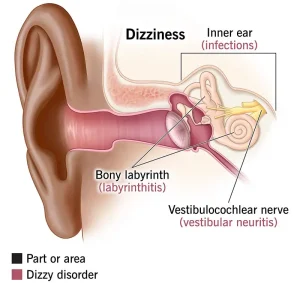
Dizziness is a common symptom that describes a range of sensations, such as feeling lightheaded, unsteady, faint, or as if the surroundings are spinning. It is not a disease itself but a signal of an underlying condition affecting balance, blood flow, the inner ear, or the nervous system. Dizziness can occur occasionally and resolve on its own, or it may be persistent and interfere with daily activities, depending on the cause.
Symptoms
The experience of dizziness varies from person to person and may include one or more sensations:
-
A spinning or whirling feeling, often referred to as vertigo
-
Lightheadedness or feeling faint
-
Loss of balance or unsteadiness while walking
-
A floating or heavy-headed sensation
-
Blurred vision or difficulty focusing
-
Nausea or vomiting associated with movement
Symptoms may worsen with changes in position, sudden movements, or standing up quickly.
Causes
Dizziness can result from a wide range of medical and non-medical factors. Common causes include:
-
Inner ear disorders such as benign paroxysmal positional vertigo, vestibular neuritis, or Ménière’s disease
-
Low blood pressure, especially when standing up suddenly
-
Dehydration due to inadequate fluid intake, fever, or excessive sweating
-
Low blood sugar levels
-
Anxiety, stress, or panic disorders
-
Medications, including blood pressure drugs, sedatives, or antidepressants
-
Neurological conditions such as migraine, stroke, or multiple sclerosis
-
Heart-related conditions that affect blood flow to the brain
Risk Factors
Certain factors can increase the likelihood of experiencing dizziness:
-
Advancing age, due to changes in balance and circulation
-
A history of inner ear problems or migraines
-
Chronic medical conditions such as diabetes, heart disease, or anemia
-
Use of multiple medications
-
Prolonged bed rest or physical inactivity
-
High levels of stress or anxiety
Complications
If dizziness is frequent or severe, it may lead to complications, including:
-
Increased risk of falls and related injuries
-
Difficulty performing daily tasks or maintaining independence
-
Reduced quality of life due to fear of movement or imbalance
-
Accidents while driving or operating machinery
-
Emotional effects such as anxiety or depression
Persistent or worsening dizziness may indicate a serious underlying condition and should be medically evaluated.
Prevention
While not all causes of dizziness can be prevented, certain measures may reduce its frequency or severity:
-
Staying well hydrated throughout the day
-
Standing up slowly from sitting or lying positions
-
Eating regular, balanced meals to maintain stable blood sugar levels
-
Managing stress through relaxation techniques or physical activity
-
Avoiding excessive caffeine and alcohol intake
-
Reviewing medications with a healthcare provider if dizziness occurs
-
Using support or assistive devices if balance is affected
Early recognition of triggers and timely medical care can help manage dizziness effectively and prevent related complications.
Advertisement
