
Overview
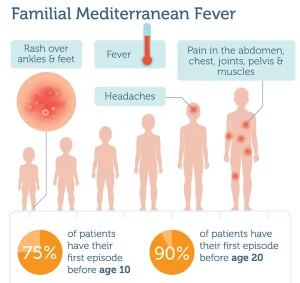
Familial Mediterranean Fever is a hereditary autoinflammatory disorder characterized by recurrent episodes of fever and painful inflammation in the abdomen, chest, or joints. The condition typically begins in childhood or adolescence and is most common among people of Mediterranean descent, including individuals from Middle Eastern, North African, and Southern European backgrounds.
Familial Mediterranean Fever is caused by mutations in the MEFV gene, which affects the body’s regulation of inflammation. Although there is no cure, early diagnosis and proper treatment can effectively control symptoms and prevent long-term complications.
Symptoms
Symptoms usually occur in sudden attacks that last one to three days and resolve on their own. The severity and frequency of attacks vary between individuals.
Common symptoms include:
-
Recurrent episodes of fever
-
Severe abdominal pain due to inflammation of the lining of the abdomen
-
Chest pain caused by inflammation around the lungs or heart
-
Joint pain or swelling, especially in the knees and ankles
-
Muscle pain
-
Red, swollen rash on the lower legs or ankles
Between attacks, most individuals feel completely well.
Causes
Familial Mediterranean Fever is caused by mutations in the MEFV gene, which provides instructions for making a protein involved in controlling inflammation. When this protein does not function properly, the immune system triggers inflammation without an infection or injury.
The condition is usually inherited in an autosomal recessive pattern, meaning a person must inherit two mutated copies of the gene to develop symptoms. In some cases, individuals with a single mutation may still experience symptoms.
Risk Factors
Factors that increase the likelihood of developing Familial Mediterranean Fever include:
-
Family history of the condition
-
Mediterranean ancestry
-
Onset of symptoms during childhood or adolescence
Both males and females can be affected, though males may experience more severe symptoms.
Complications
If not properly treated, Familial Mediterranean Fever can lead to serious complications, including:
-
Amyloidosis, a condition where abnormal protein deposits damage organs, especially the kidneys
-
Chronic kidney disease or kidney failure
-
Persistent joint damage
-
Reduced quality of life due to frequent painful attacks
The risk of complications increases when inflammation is not adequately controlled.
Prevention
Familial Mediterranean Fever cannot be prevented because it is genetic, but complications can be effectively avoided with appropriate management:
-
Lifelong use of prescribed anti-inflammatory medication to prevent attacks
-
Regular monitoring for signs of amyloidosis and kidney involvement
-
Genetic counseling for affected individuals and families
-
Early diagnosis and treatment in children with recurrent unexplained fevers
With consistent treatment and follow-up care, most individuals with Familial Mediterranean Fever can lead healthy, active lives.
Advertisement
