
Overview
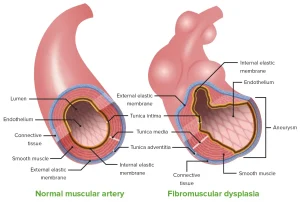
Fibromuscular dysplasia is a rare condition that affects the walls of medium-sized arteries, causing abnormal cell growth that leads to narrowing, enlargement, or tearing of the affected blood vessels. It most commonly involves the arteries supplying the kidneys and brain, but other arteries can also be affected. The condition can reduce blood flow and increase the risk of high blood pressure, stroke, or aneurysm. Fibromuscular dysplasia is more common in women and may be discovered incidentally during imaging tests.
Symptoms
Symptoms depend on which arteries are affected and the severity of vessel changes:
-
High blood pressure, especially at a young age
-
Headaches or migraines
-
Dizziness or lightheadedness
-
Neck pain
-
Pulsatile ringing in the ears
-
Vision changes
-
Chest or abdominal pain in some cases
Some people may have no symptoms until complications develop.
Causes
The exact cause of fibromuscular dysplasia is unknown. It is believed to result from a combination of genetic, hormonal, and environmental factors. Abnormal development of artery walls leads to alternating areas of narrowing and enlargement, often described as a string-of-beads appearance on imaging.
Risk Factors
Factors that may increase the risk of fibromuscular dysplasia include:
-
Female sex
-
Age under 50 years
-
Family history of fibromuscular dysplasia
-
Hormonal influences
Although less common, men and older adults can also be affected.
Complications
Fibromuscular dysplasia can lead to serious complications if not recognized:
-
High blood pressure that is difficult to control
-
Reduced blood flow to organs
-
Aneurysm formation
-
Artery dissection or tearing
-
Stroke or transient ischemic attack
Regular monitoring helps reduce the risk of complications.
Prevention
There is no known way to prevent fibromuscular dysplasia, but managing the condition can lower complication risks:
-
Regular medical follow-up and imaging as advised
-
Controlling blood pressure
-
Avoiding smoking
-
Maintaining a heart-healthy lifestyle
-
Seeking prompt medical care for new neurological or vascular symptoms
Early detection and ongoing care are essential for managing fibromuscular dysplasia effectively.
Advertisement
