
Overview
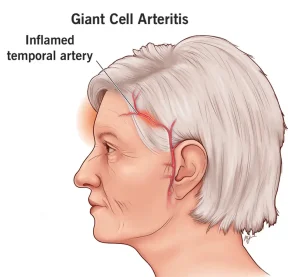
Giant cell arteritis is an inflammatory condition that affects the lining of medium and large arteries, most commonly those in the head, especially the temples. It is also known as temporal arteritis. The condition causes narrowing or blockage of affected arteries, reducing blood flow to vital tissues. Giant cell arteritis is a medical emergency because delayed treatment can lead to serious complications, including permanent vision loss.
Symptoms
Symptoms of giant cell arteritis can develop suddenly or gradually and may worsen over time. Common symptoms include:
-
Persistent headache, often on one or both sides of the head
-
Scalp tenderness, especially when combing hair
-
Jaw pain or fatigue while chewing
-
Vision problems such as blurred vision, double vision, or sudden vision loss
-
Fever
-
Fatigue or weakness
-
Unexplained weight loss
-
Muscle aches, particularly in the shoulders and hips
Some individuals may also have symptoms of polymyalgia rheumatica.
Causes
The exact cause of giant cell arteritis is not fully understood. It is believed to occur when the immune system mistakenly attacks the walls of arteries, causing inflammation. Possible contributing factors include:
-
Abnormal immune system response
-
Genetic predisposition
-
Age-related changes in blood vessels
-
Environmental triggers such as infections
The inflammation leads to thickening of artery walls and reduced blood flow.
Risk Factors
Several factors increase the risk of developing giant cell arteritis, including:
-
Age over 50
-
Female sex
-
Northern European ancestry
-
History of polymyalgia rheumatica
-
Family history of the condition
Giant cell arteritis rarely affects younger individuals.
Complications
If not treated promptly, giant cell arteritis can cause serious and permanent complications. Possible complications include:
-
Sudden and irreversible vision loss
-
Stroke due to reduced blood flow to the brain
-
Aneurysm or weakening of large arteries
-
Narrowing of blood vessels leading to chronic circulation problems
Early diagnosis and treatment significantly reduce the risk of complications.
Prevention
There is no known way to prevent giant cell arteritis, as the exact cause is unclear. However, steps can help reduce the risk of severe outcomes:
-
Seeking immediate medical care for new, persistent headaches or vision changes
-
Early diagnosis and prompt treatment with prescribed medications
-
Regular follow-up to monitor symptoms and blood vessel health
-
Managing related conditions such as polymyalgia rheumatica
Timely medical attention plays a crucial role in preventing vision loss and other serious complications associated with giant cell arteritis.
Advertisement
