
Overview
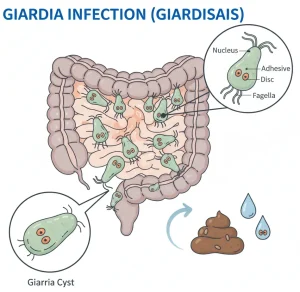
Giardia infection, also known as giardiasis, is a common intestinal illness caused by the microscopic parasite Giardia lamblia. The infection affects the small intestine and interferes with normal digestion and nutrient absorption. Giardiasis is one of the most frequent causes of waterborne diarrheal disease and can affect people of all ages. It is highly contagious and often spreads through contaminated water, food, or direct contact.
Symptoms
Symptoms of giardiasis usually appear one to three weeks after exposure, although some people may not develop symptoms. Common symptoms include:
-
Watery or greasy diarrhea
-
Abdominal cramps or pain
-
Bloating and excessive gas
-
Nausea or vomiting
-
Fatigue
-
Weight loss
-
Foul-smelling stools that may float
In some cases, symptoms can become chronic and last for weeks or months.
Causes
Giardia infection occurs when a person ingests cysts of the Giardia parasite. Common sources of infection include:
-
Drinking contaminated water from lakes, rivers, or untreated supplies
-
Eating food washed or prepared with contaminated water
-
Poor hand hygiene after using the toilet or changing diapers
-
Close contact with an infected person
Once inside the body, the parasite multiplies in the intestines and causes digestive symptoms.
Risk Factors
Several factors increase the risk of giardiasis, including:
-
Drinking untreated or unfiltered water
-
Traveling to areas with poor sanitation
-
Childcare settings with diapered children
-
Close contact with an infected individual
-
Weakened immune system
Outdoor activities such as camping and hiking may also increase exposure risk.
Complications
If untreated, giardiasis can lead to complications, particularly in children and individuals with weakened immunity. Possible complications include:
-
Chronic diarrhea
-
Dehydration
-
Malnutrition due to poor nutrient absorption
-
Lactose intolerance that may persist after infection
-
Delayed growth in children
Prompt treatment helps prevent long-term complications.
Prevention
Giardia infection can often be prevented with proper hygiene and safe water practices:
-
Drinking treated, boiled, or filtered water
-
Avoiding swallowing water while swimming in lakes or pools
-
Washing hands thoroughly with soap and water
-
Practicing safe food handling and preparation
-
Maintaining good hygiene in childcare settings
Following preventive measures is key to reducing the risk of giardiasis and its spread.
Advertisement
