
Overview
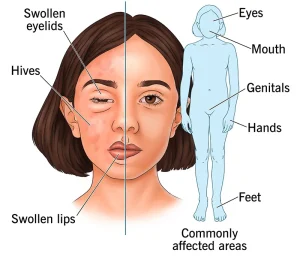
Hives and Angioedema are related skin conditions that cause swelling and discomfort due to an allergic or immune system reaction. Hives, also known as urticaria, appear as raised, itchy welts on the surface of the skin. Angioedema involves deeper swelling beneath the skin, often affecting the face, lips, eyelids, hands, feet, or throat.
These conditions can occur together or separately. They may last for a few hours or days (acute) or persist for more than six weeks (chronic). While most cases are mild and resolve on their own, severe angioedema involving the throat can be life-threatening and requires immediate medical attention.
Early identification of triggers and proper treatment can help manage symptoms effectively.
Symptoms
Hives typically cause:
-
Raised, red or skin-colored welts
-
Itching, which may be intense
-
Welts that vary in size and shape
-
Lesions that appear and fade within hours
-
Swelling that may move from one area to another
Angioedema may cause:
-
Deep swelling beneath the skin
-
Puffiness around the eyes and lips
-
Swelling of the hands, feet, or genitals
-
Abdominal pain in some cases
-
Swelling of the tongue or throat, which can cause difficulty breathing
Swelling in the throat or airway is a medical emergency.
Causes
Hives and angioedema occur when the body releases histamine and other chemicals into the bloodstream, leading to inflammation and swelling.
Common triggers include:
-
Food allergies such as nuts, shellfish, eggs, or milk
-
Medications such as antibiotics or pain relievers
-
Insect stings
-
Infections
-
Stress
-
Exposure to heat, cold, sunlight, or pressure
-
Latex exposure
In some cases, especially chronic hives, no specific trigger can be identified.
Risk Factors
Certain factors increase the likelihood of developing hives or angioedema:
-
Personal or family history of allergies
-
Previous episodes of hives
-
Autoimmune disorders
-
Viral infections
-
Use of certain medications such as ACE inhibitors
Individuals with allergic conditions like asthma or eczema may be at higher risk.
Complications
Most cases are mild, but complications can occur.
Possible complications include:
-
Severe allergic reaction (anaphylaxis)
-
Swelling of the throat leading to airway obstruction
-
Chronic discomfort and sleep disturbance
-
Anxiety related to recurrent episodes
Anaphylaxis is a life-threatening emergency and may include difficulty breathing, rapid heartbeat, dizziness, and a drop in blood pressure.
Prevention
Preventing hives and angioedema focuses on avoiding known triggers.
Preventive strategies include:
-
Identifying and avoiding allergy triggers
-
Reading food labels carefully
-
Informing healthcare providers about medication allergies
-
Managing stress
-
Avoiding extreme temperature exposure if sensitive
-
Carrying emergency medication such as epinephrine if prescribed
People with recurrent or severe episodes should seek medical evaluation to determine the underlying cause and appropriate treatment plan.
Advertisement
