
Overview
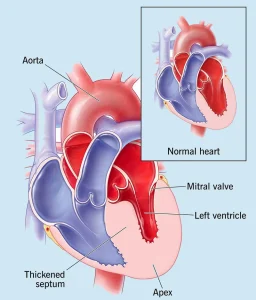
Hypertrophic cardiomyopathy is a heart condition in which the heart muscle becomes abnormally thick. The thickening most often affects the wall between the two lower chambers of the heart, called the ventricles. This can make it harder for the heart to pump blood effectively and may block blood flow out of the heart.
Hypertrophic cardiomyopathy is usually inherited and can affect people of all ages. Some people have no symptoms, while others may develop serious heart problems. With proper medical care, many individuals with this condition can lead active and productive lives.
Symptoms
Symptoms of hypertrophic cardiomyopathy vary widely. Some people may not experience any symptoms for many years.
Common symptoms include:
-
Shortness of breath, especially during exercise
-
Chest pain, particularly with physical activity
-
Fatigue
-
Dizziness or lightheadedness
-
Fainting, especially during or after exertion
-
Heart palpitations
-
Reduced exercise tolerance
In some cases, the first sign of the condition may be a serious heart rhythm problem.
Causes
Hypertrophic cardiomyopathy is most often caused by genetic changes that affect the heart muscle.
Possible causes include:
-
Inherited gene mutations affecting heart muscle proteins
-
Abnormal growth of heart muscle cells
-
Disorganized arrangement of heart muscle fibers
These changes cause the heart muscle to thicken, which can interfere with normal blood flow and electrical signaling in the heart.
Risk factors
Factors that increase the risk of hypertrophic cardiomyopathy include:
-
Family history of hypertrophic cardiomyopathy
-
Genetic mutations passed from a parent
-
Having a close relative who died suddenly from a heart condition
The condition can occur in both men and women and may be diagnosed at any age.
Complications
Hypertrophic cardiomyopathy can lead to serious and potentially life-threatening complications.
Possible complications include:
-
Irregular heart rhythms, such as atrial fibrillation
-
Heart failure
-
Blockage of blood flow from the heart
-
Sudden cardiac arrest
-
Stroke due to blood clots
-
Increased risk of infection of the heart lining
Regular follow-up and appropriate treatment help reduce the risk of complications.
Prevention
Hypertrophic cardiomyopathy cannot usually be prevented because it is inherited. However, early detection and management can help reduce complications.
Preventive steps include:
-
Genetic counseling and testing for family members
-
Regular heart checkups if there is a family history
-
Following treatment and activity recommendations from a healthcare provider
-
Avoiding extreme exertion if advised by a doctor
Early diagnosis and ongoing care play an important role in improving outcomes and quality of life.
Advertisement
