
Overview
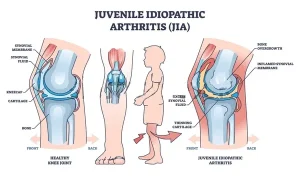
Juvenile idiopathic arthritis is a chronic inflammatory condition that affects children under the age of 16. It is characterized by persistent joint inflammation that lasts for at least six weeks and has no identifiable cause. The condition can involve one or multiple joints and may also affect other parts of the body, such as the eyes or internal organs. Juvenile idiopathic arthritis varies widely in severity and course, with some children experiencing mild symptoms and others developing long-term complications.
Symptoms
Symptoms of juvenile idiopathic arthritis depend on the type and severity of the condition and may fluctuate over time:
-
Joint pain, swelling, and stiffness, especially in the morning
-
Reduced range of motion or difficulty using affected joints
-
Limping, particularly in younger children
-
Warmth or tenderness around joints
-
Fatigue or reduced activity levels
-
Fever or rash in certain subtypes
-
Eye inflammation that may occur without obvious symptoms
Symptoms may improve or worsen during flare-ups.
Causes
The exact cause of juvenile idiopathic arthritis is not known. It is considered an autoimmune condition in which the immune system mistakenly attacks healthy joint tissue, leading to inflammation. Genetic predisposition and environmental triggers are believed to play a role, but no single factor has been identified as the direct cause.
Risk Factors
Several factors may increase the risk of developing juvenile idiopathic arthritis:
-
Family history of autoimmune or inflammatory diseases
-
Certain genetic markers
-
Female sex, depending on the subtype
-
Exposure to environmental triggers such as infections
Many children develop the condition without any known risk factors.
Complications
Without proper management, juvenile idiopathic arthritis can lead to complications:
-
Joint damage or deformity
-
Delayed growth or uneven limb development
-
Chronic pain and reduced mobility
-
Eye problems, including uveitis, which can lead to vision loss if untreated
-
Osteoporosis or reduced bone strength
-
Emotional and social challenges due to chronic illness
Early diagnosis and treatment help reduce the risk of long-term complications.
Prevention
There is no known way to prevent juvenile idiopathic arthritis. However, early recognition and ongoing care can improve outcomes:
-
Regular medical follow-up to monitor disease activity
-
Early treatment to control inflammation and protect joints
-
Routine eye examinations to detect silent eye inflammation
-
Encouraging age-appropriate physical activity to maintain joint function
-
Providing emotional support and education for children and families
Comprehensive care and early intervention play a key role in managing juvenile idiopathic arthritis and supporting healthy growth and development.
Advertisement
