
Overview
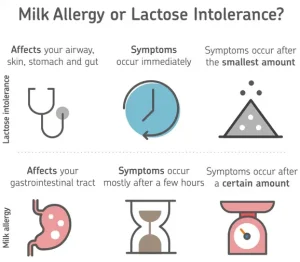
Milk allergy is an immune system reaction to proteins found in cow’s milk. It is one of the most common food allergies in infants and young children, though it can also affect adults. Milk allergy occurs when the immune system mistakenly identifies milk proteins as harmful and triggers an allergic response.
Milk allergy is different from lactose intolerance. Lactose intolerance involves difficulty digesting milk sugar, while milk allergy involves the immune system and can cause serious or even life-threatening reactions.
Symptoms
Symptoms of milk allergy usually appear within minutes to a few hours after consuming milk or milk-containing products. The severity can range from mild to severe.
Common symptoms include:
-
Hives or skin rash
-
Itching or swelling of the lips, face, or throat
-
Vomiting
-
Diarrhea
-
Abdominal pain or cramping
-
Wheezing or difficulty breathing
-
Runny or blocked nose
-
Coughing
Severe reactions may lead to anaphylaxis, which can cause breathing difficulty, a sudden drop in blood pressure, dizziness, or loss of consciousness and requires immediate medical attention.
Causes
Milk allergy is caused by an abnormal immune response to one or more proteins in milk, most commonly casein and whey.
Key factors involved include:
-
Immune system sensitivity to milk proteins
-
Early exposure to milk proteins in susceptible individuals
-
Genetic tendency toward allergic conditions
When milk proteins enter the body, the immune system releases chemicals such as histamine, leading to allergic symptoms.
Risk Factors
Certain factors increase the likelihood of developing a milk allergy.
Key risk factors include:
-
Infancy or early childhood
-
Family history of allergies, asthma, or eczema
-
Other food allergies
-
Atopic conditions such as eczema
-
Immature digestive and immune systems in infants
Many children outgrow milk allergy as they get older, but some continue to have it into adulthood.
Complications
Milk allergy can lead to complications, especially if reactions are frequent or severe.
Possible complications include:
-
Anaphylaxis
-
Poor growth or nutritional deficiencies in children if milk is not properly replaced
-
Increased risk of other food allergies
-
Anxiety related to fear of accidental exposure
-
Reduced quality of life due to dietary restrictions
Careful dietary planning is essential to avoid complications.
Prevention
There is no guaranteed way to prevent milk allergy, but certain measures may reduce risk or help manage the condition effectively.
Preventive and management strategies include:
-
Avoiding milk and milk-containing products
-
Reading food labels carefully
-
Using suitable milk alternatives when recommended
-
Following medical advice on infant feeding practices
-
Carrying emergency medication if prescribed
-
Educating caregivers, teachers, and family members about the allergy
Early diagnosis and strict avoidance of milk proteins are key to preventing allergic reactions and maintaining overall health.
Advertisement
