
Overview
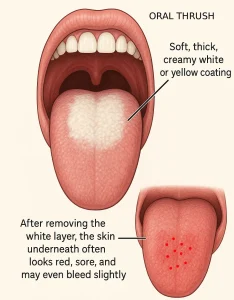
Oral thrush is a common fungal infection of the mouth caused by an overgrowth of Candida yeast, most often Candida albicans. It occurs when the natural balance of microorganisms in the mouth is disrupted, allowing the fungus to multiply. Oral thrush can affect infants, older adults, and individuals with weakened immune systems, but it can occur at any age.
Symptoms
Symptoms of oral thrush can range from mild to severe and may develop suddenly:
-
White, creamy patches on the tongue, inner cheeks, gums, or throat
-
Redness or soreness in the mouth
-
Burning sensation or pain
-
Cracking at the corners of the mouth
-
Loss of taste or unpleasant taste
-
Bleeding when white patches are scraped
-
Difficulty swallowing in more severe cases
Causes
Oral thrush develops when Candida yeast grows excessively in the mouth. Factors that contribute to this overgrowth include:
-
Weakened immune system
-
Use of antibiotics that disrupt normal oral flora
-
Use of inhaled corticosteroids
-
Poor oral hygiene
-
Dentures that do not fit properly
-
Dry mouth reducing natural cleansing
Risk Factors
Certain conditions and behaviors increase the risk of oral thrush:
-
Infancy or older age
-
Diabetes, especially if poorly controlled
-
HIV infection or other immunodeficiency states
-
Cancer or chemotherapy treatment
-
Smoking
-
Prolonged use of oral or inhaled steroids
Complications
If not treated, oral thrush can lead to complications, particularly in high-risk individuals:
-
Spread of infection to the esophagus
-
Persistent pain and discomfort
-
Difficulty eating or drinking
-
Recurring infections
-
Systemic fungal infection in severely immunocompromised individuals
Prevention
Preventive measures help reduce the risk of developing oral thrush:
-
Maintaining good oral hygiene
-
Rinsing the mouth after using inhaled corticosteroids
-
Managing underlying health conditions such as diabetes
-
Cleaning dentures regularly
-
Limiting sugar intake
-
Avoiding smoking
Request an appointment
Advertisement
