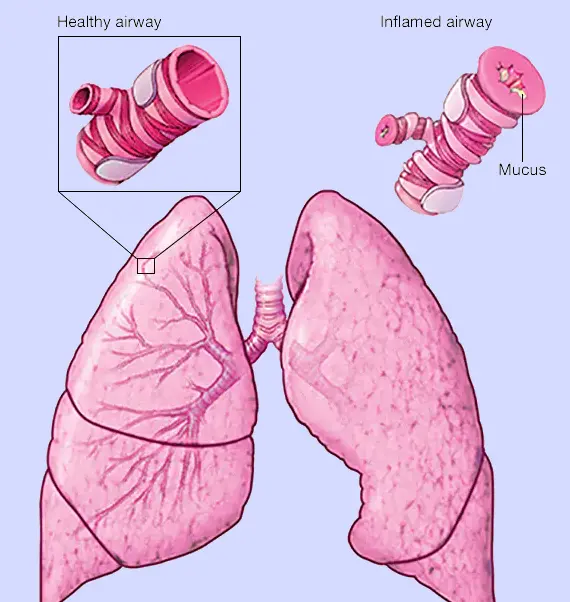
An asthma attack is a sudden worsening of asthma symptoms. Asthma is a long-term condition that affects the airways in the lungs, causing them to become narrow and making breathing difficult. During an asthma attack, symptoms such as coughing, wheezing, chest tightness and trouble getting enough air can develop or rapidly worsen. These symptoms occur because the muscles around the …
Childhood Asthma
Asthma is a long-term (chronic) lung disease that affects your airways. Your airways are the tubes that carry air in and out of your lungs. When you have asthma, you can’t get air into your lungs because your airways swell and get too narrow. Like a pinched straw, this makes it hard for you to breathe, which can cause wheezing, coughing and chest …
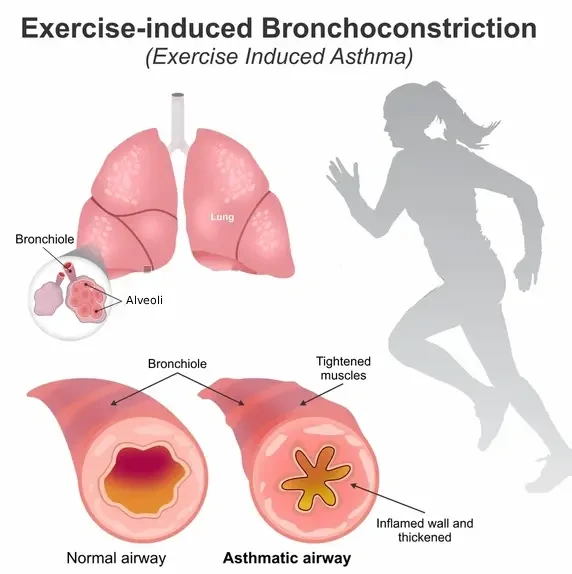
Exercise-Induced Asthma
Exercise-induced asthma happens when your airways get smaller during exercise, making it hard for you to breathe. You may have asthma symptoms like coughing, wheezing and shortness of breath during or after physical activity. Symptoms can be worse when the air is cold and dry, or when pollution levels and pollen counts are high. Exercise-induced asthma is also called exercise-induced bronchoconstriction (EIB) or sports-induced asthma. How common is …
Occupational Asthma
Asthma is a disease that affects your airways, making it hard to breathe. When asthma begins or gets worse because of your job, healthcare providers may diagnose work-related asthma. For 15% to 33% of adult-onset asthma, their asthma is work-related. Work-related asthma has two categories: Occupational asthma starts due to inhaling (breathing in) irritants in the workplace. Work-exacerbated asthma is when existing asthma gets …
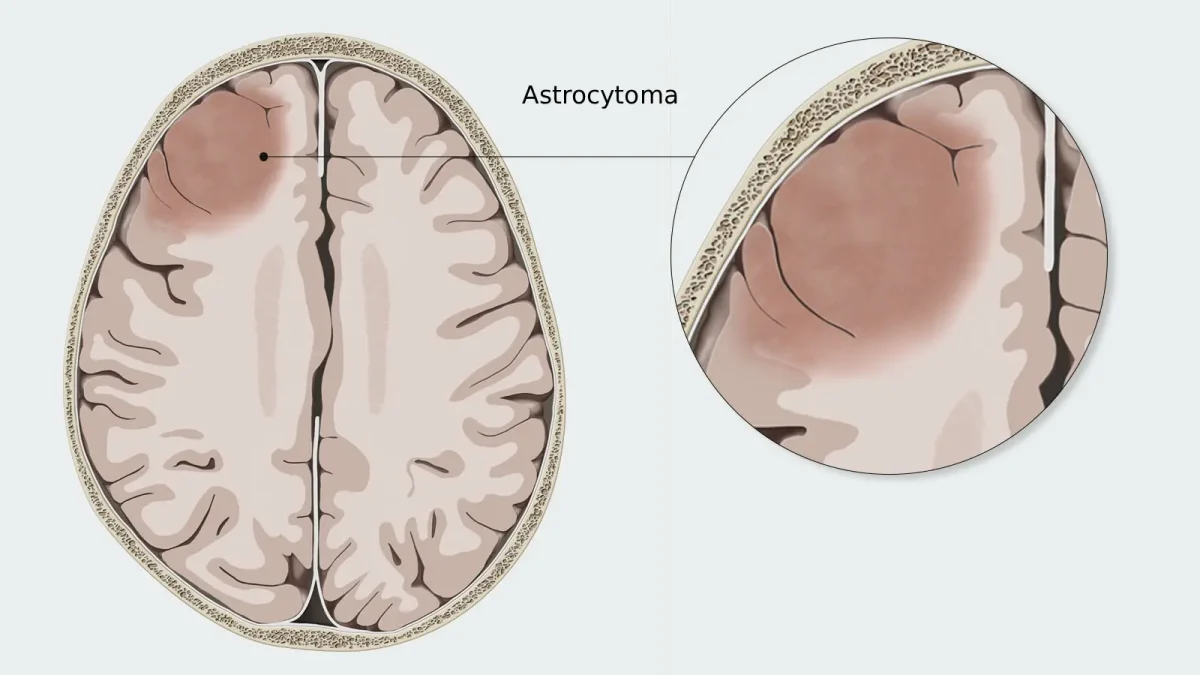
Astrocytoma
Astrocytoma is a type of brain tumor or spinal cord tumor that begins in astrocytes. Astrocytes are star-shaped cells that support nerve cells and help keep the brain and spinal cord functioning properly. Astrocytoma is part of a broader group of tumors called gliomas, which develop from glial cells that support and protect nerve cells. Astrocytomas can vary widely in …
Juvenile Idiopathic Arthritis
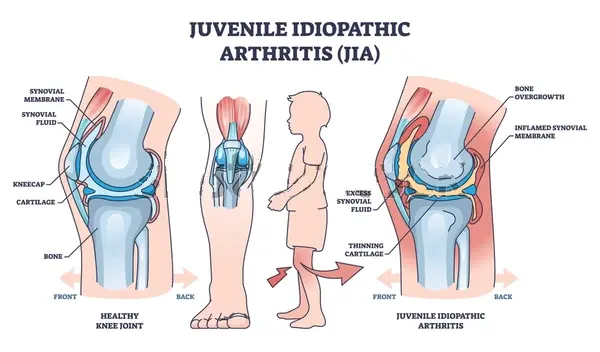
Juvenile idiopathic arthritis (JIA) is the most common type of arthritis that affects children. JIA is a chronic (long-lasting) disease that can affect joints in any part of the body. JIA is an autoimmune disease in which the body’s immune system mistakenly targets the synovium, the tissue that lines the inside of the joint, and the synovial fluid in the joint. This …
Psoriatic Arthritis
Psoriatic arthritis is a type of arthritis. It usually affects people who have psoriasis or a biological family history of psoriasis. Arthritis is a common disorder that affects your joints. It causes pain and inflammation in and around your joints. Psoriasis causes inflammation in your skin. Psoriasis rashes are patches of discolored skin covered with scales. These thick, scaly areas are called plaques. …
Reactive Arthritis
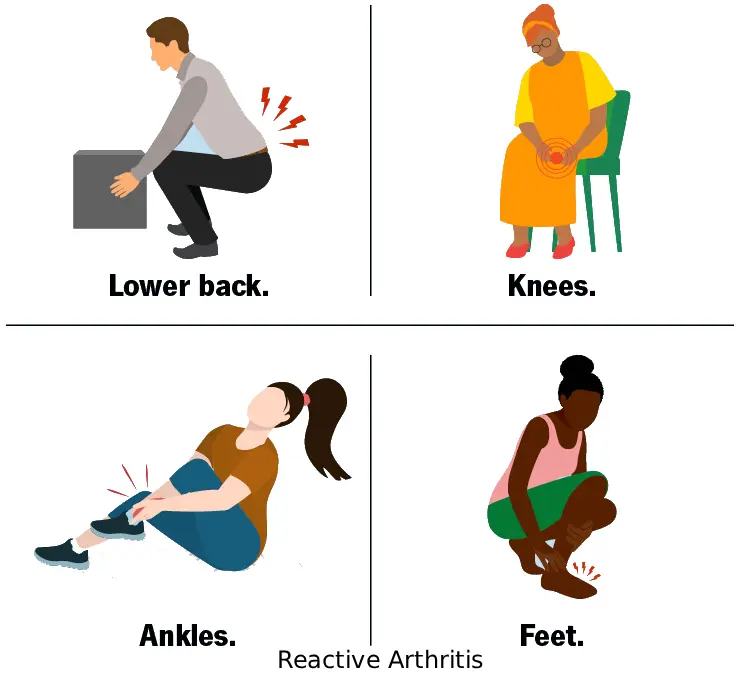
Reactive arthritis (Reiter’s syndrome) is a rare, temporary form of inflammatory arthritis that’s triggered by a bacterial infection. It causes pain and stiffness in your joints, especially in your lower body. It can also cause symptoms in other body tissues, like your eyes and skin, as well as whole-body symptoms like fatigue. But unlike most types of arthritis, it’s not a lifelong condition, and it usually …
Rheumatoid Arthritis
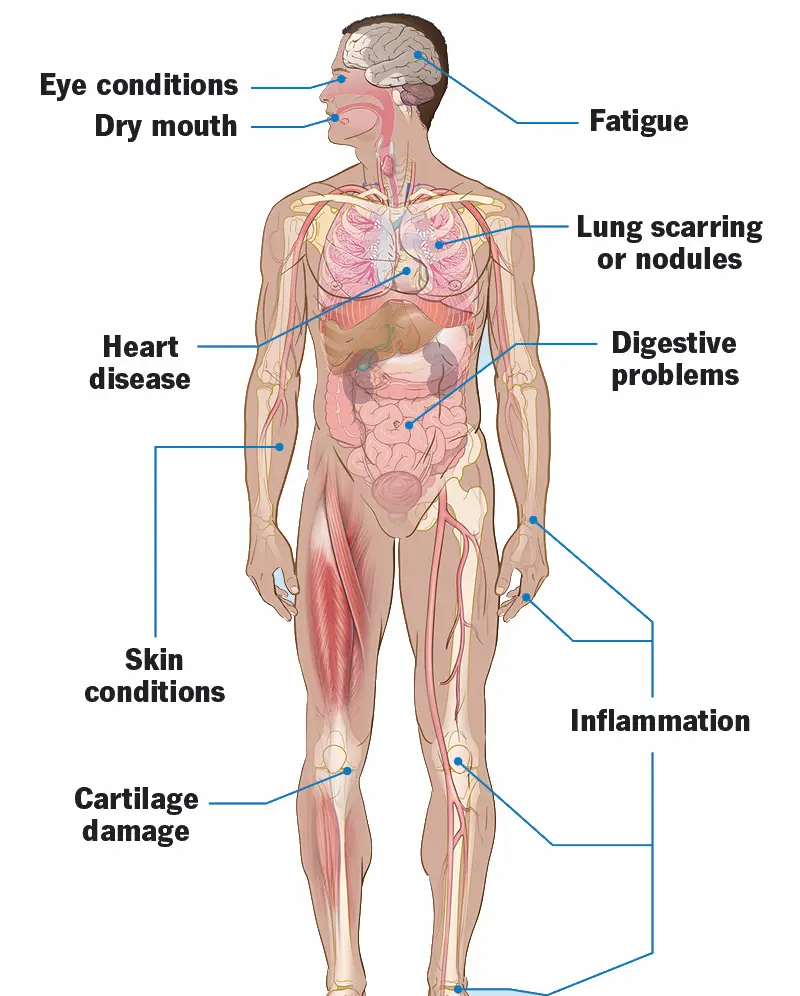
Rheumatoid arthritis (RA) is a chronic (ongoing) autoimmune disease that causes pain, swelling and stiffness in the lining of your joints (synovium). It most commonly affects the joints in your fingers, hands, wrists, knees, ankles, feet and toes. RA usually occurs in the same joints on both sides of your body, which makes it different from some other types of arthritis. Uncontrolled inflammation damages cartilage, which …
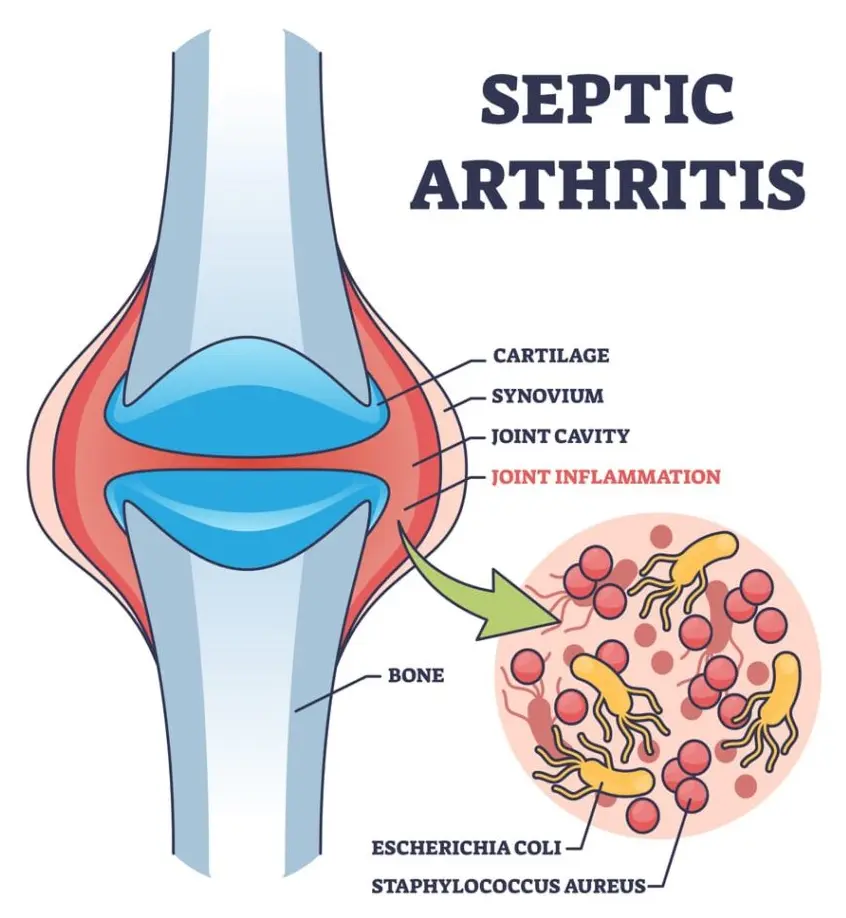
Septic Arthritis
Septic arthritis (also known as infectious arthritis) happens when an infection spreads to one or more of your joints and causes inflammation. The inflammation is in the surface of the cartilage (a type of connective tissue) that lines your joints and the synovial fluid that lubricates your joints. Bacteria, a virus or fungus may cause the infection, which usually comes …