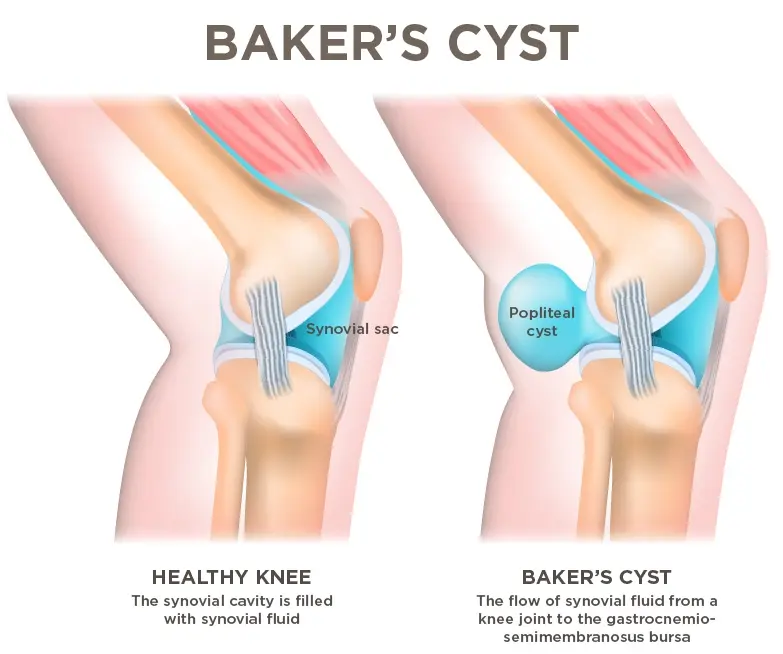
Diagnosis of a Baker Cyst A Baker cyst can often be identified during a physical examination. Because its symptoms may resemble those of more serious conditions such as a blood clot, aneurysm, or tumor, further evaluation may be required: Physical exam: The healthcare professional examines the back of the knee for swelling or a palpable lump. Imaging tests: Ultrasound, X-ray, …
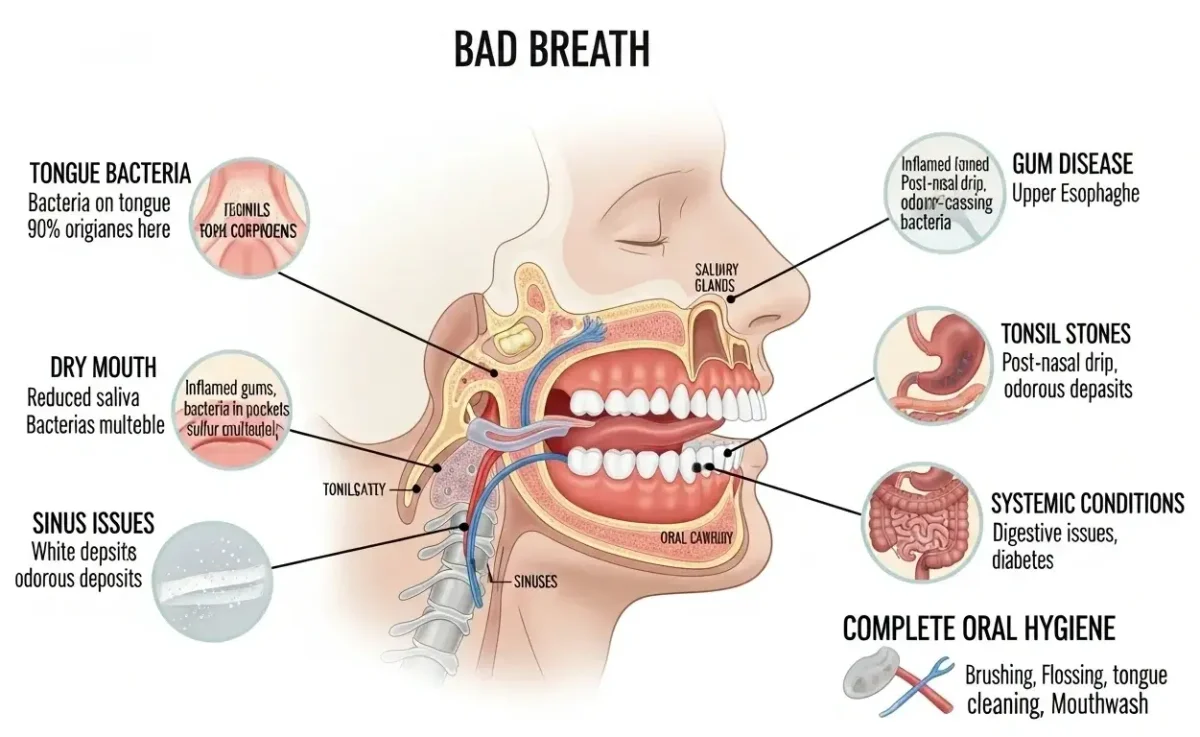
Bad Breath
Diagnosis of Bad Breath (Halitosis) Diagnosing halitosis involves a combination of clinical examination and specialized tests: Oral examination: The dentist evaluates the mouth, teeth, gums, and tongue. The back of the tongue is often scraped to detect bacterial activity that produces odor. Odor assessment: Dentists may smell exhaled air from the mouth and nose and rate the intensity on a …
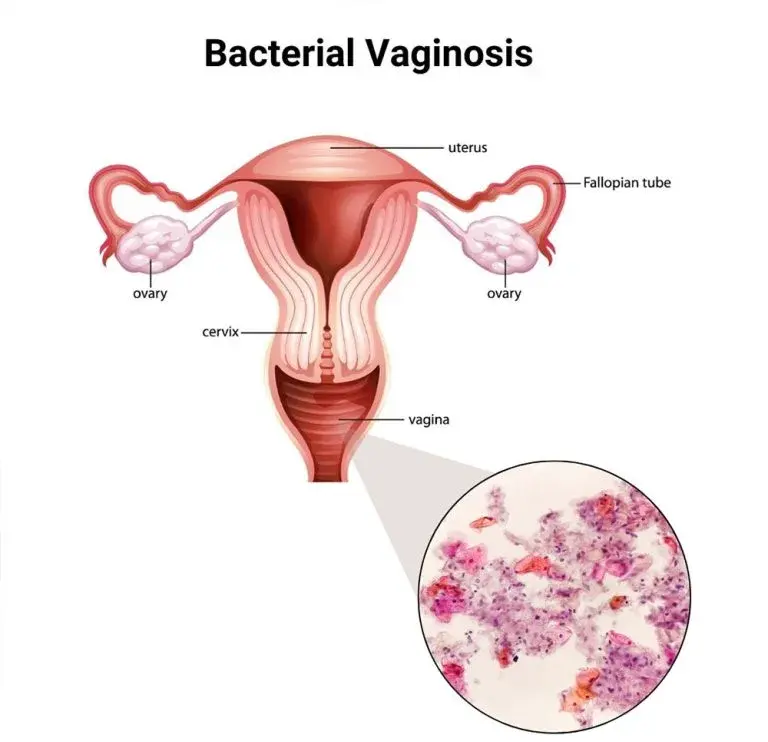
Bacterial Vaginosis
Diagnosis of Bacterial Vaginosis (BV) Bacterial vaginosis is diagnosed through a combination of clinical evaluation and laboratory tests: Medical history review: Your doctor asks about previous vaginal infections, sexually transmitted infections, and risk factors for BV. Pelvic exam: The doctor inspects the vagina for signs of infection and palpates the pelvic organs by inserting two fingers into the vagina while …
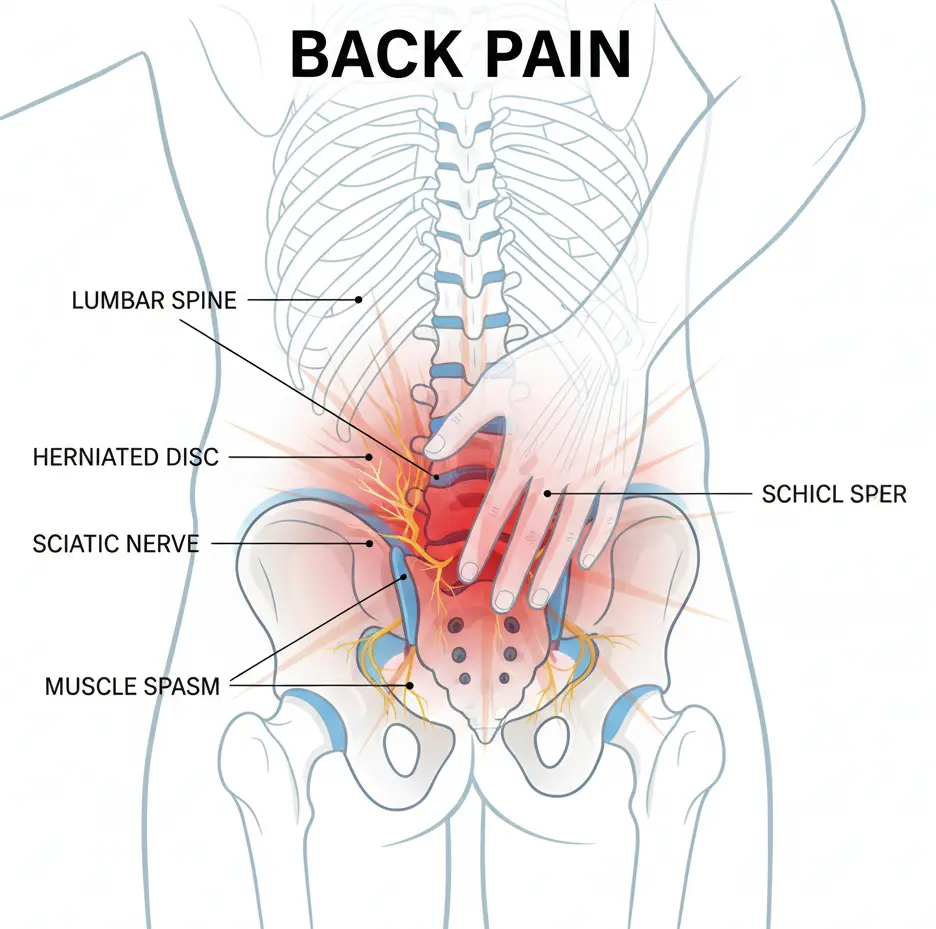
Back Pain
Diagnosis of Back Pain Diagnosing back pain involves a combination of physical examination, patient history, and diagnostic tests: Physical assessment: Your healthcare professional evaluates your ability to sit, stand, walk, and lift your legs. They may ask you to rate your pain on a scale of 0 to 10 and describe how it affects your daily activities. Range of motion …
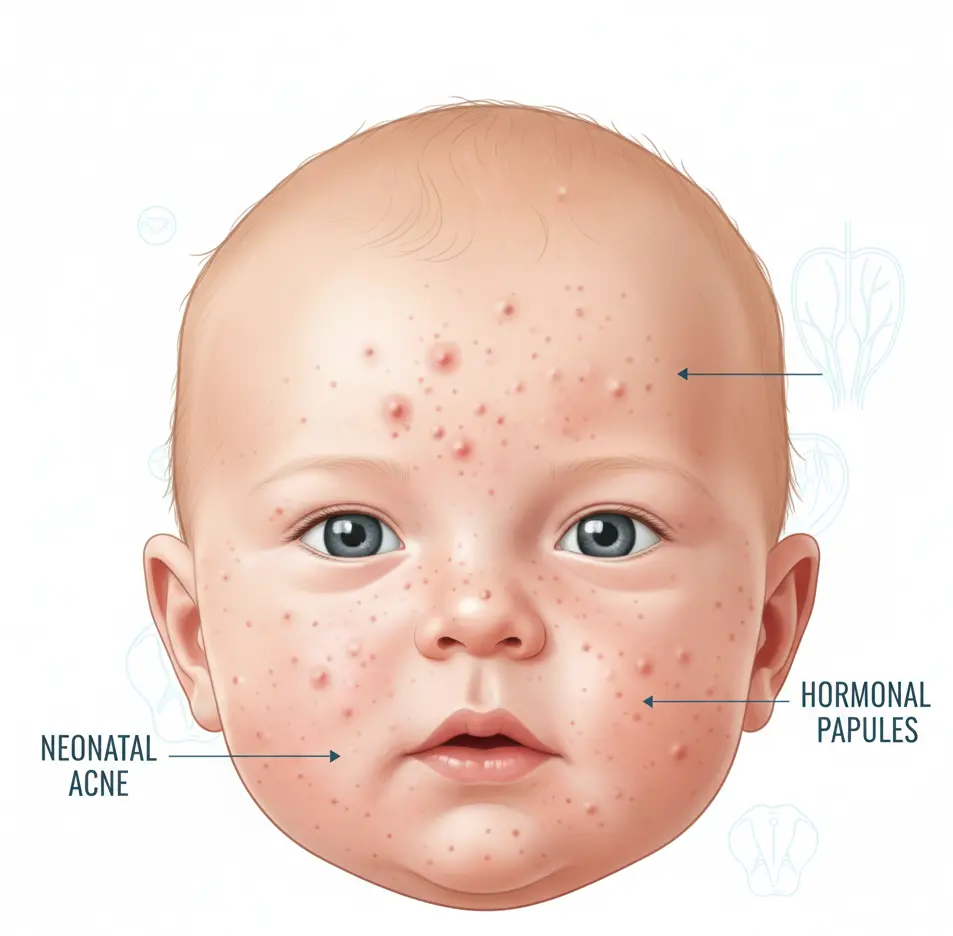
Baby Acne
Diagnosis of Baby Acne Baby acne is typically diagnosed by visual examination. Healthcare professionals can usually identify it on sight without the need for laboratory tests. The assessment involves: Observing the type and location of pimples on the baby’s face, chest, or back. Checking for signs of more serious skin conditions if the acne appears unusual or severe. No additional …
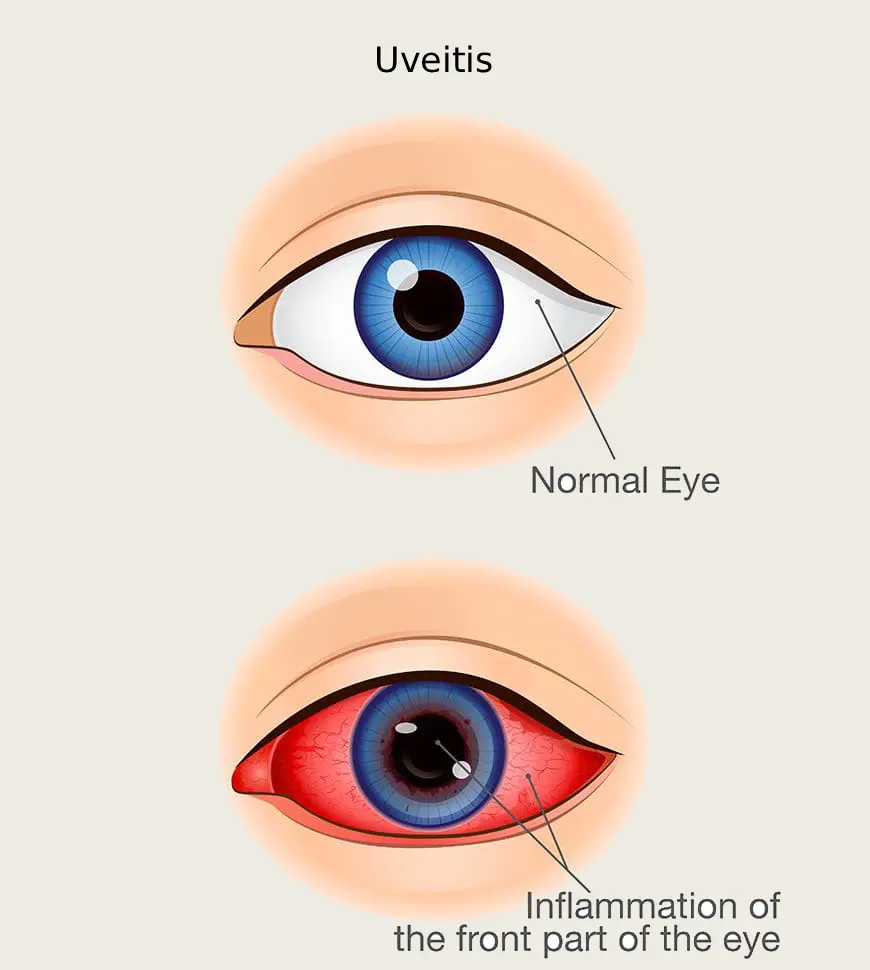
Uveitis
Diagnosis When visiting an eye specialist, a thorough eye exam and health history are typically performed. The examination may include: Assessment of vision and pupil response to light, often with glasses if normally worn. Tonometry to measure intraocular pressure, sometimes using numbing eye drops. Slit-lamp examination to magnify and illuminate the front of the eye, identifying microscopic inflammatory cells. Ophthalmoscopy …
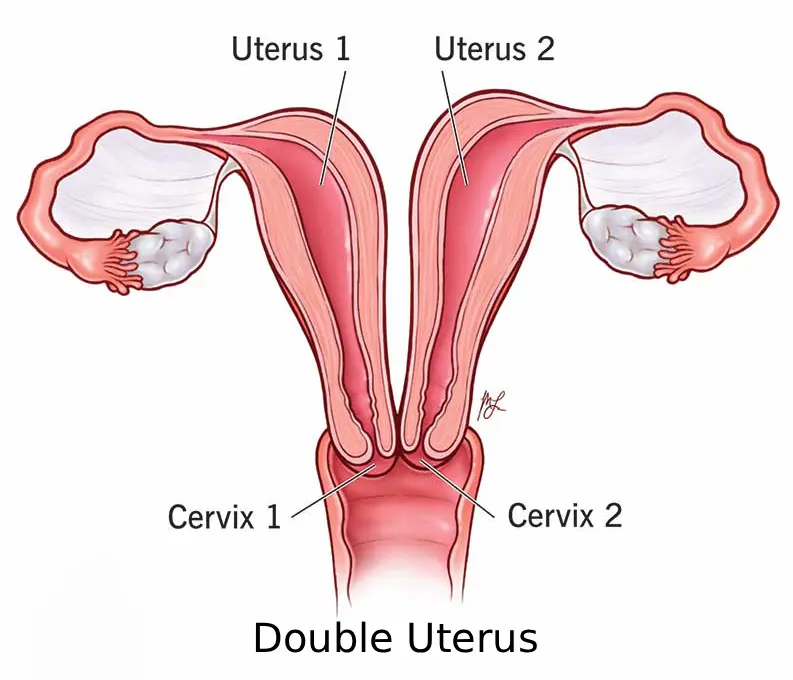
Double Uterus
Diagnosis A double uterus is often discovered during a routine pelvic exam. During the exam, your doctor may notice two cervices or feel that your uterus has an unusual shape. To confirm the diagnosis, several imaging and diagnostic tests may be recommended: Ultrasound: This imaging test uses high-frequency sound waves to create pictures of internal organs. A transducer may be …
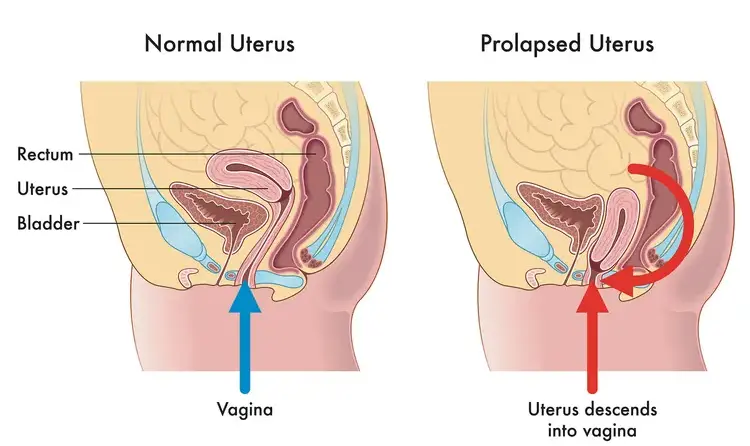
Uterine Prolapse
Diagnosis Uterine prolapse is often diagnosed during a pelvic exam. During the exam, your healthcare provider may ask you to: Bear down as if having a bowel movement to assess how far the uterus has slipped into the vagina. Tighten your pelvic muscles as if stopping a stream of urine to check pelvic muscle strength. Complete a questionnaire to help …
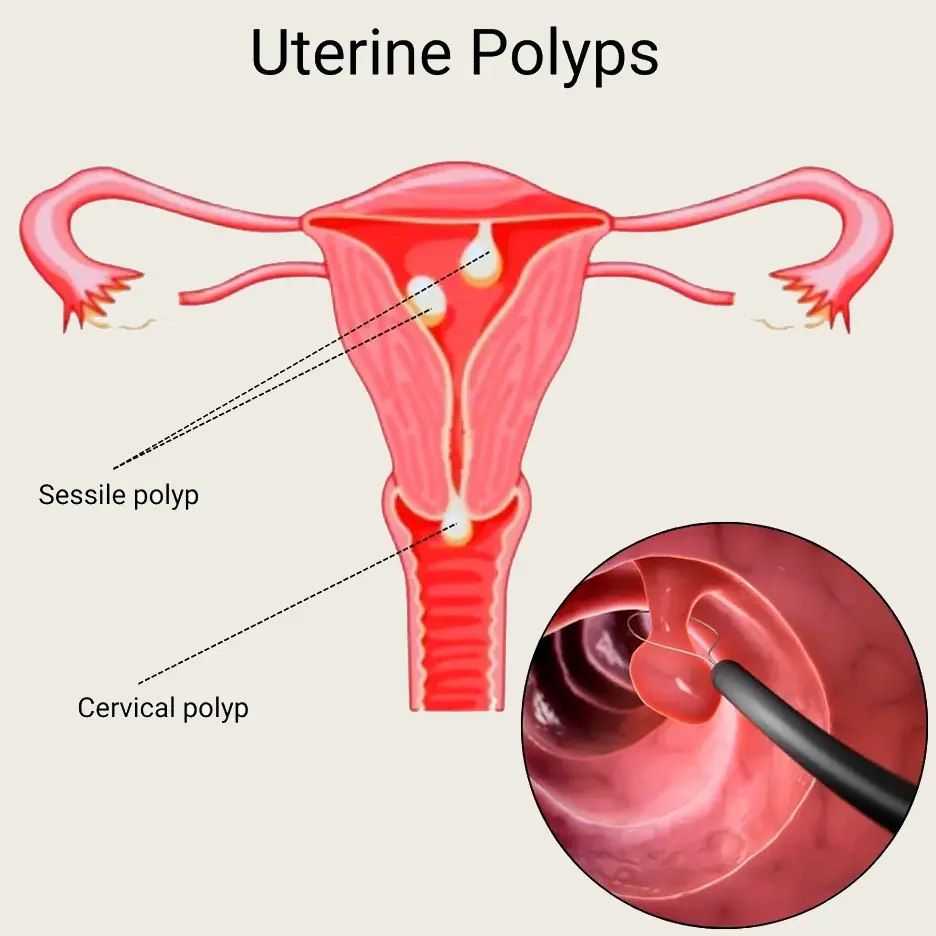
Uterine Polyps
Diagnosis Uterine polyps are growths on the inner lining of the uterus (endometrium). Diagnosis typically involves imaging and tissue sampling to confirm the presence of polyps and rule out cancerous changes. Common diagnostic tests include: Transvaginal ultrasound: A slender, wandlike device (transducer) is placed in the vagina. Sound waves create images of the uterus, ovaries, and fallopian tubes. Polyps or …
Uterine Fibroids
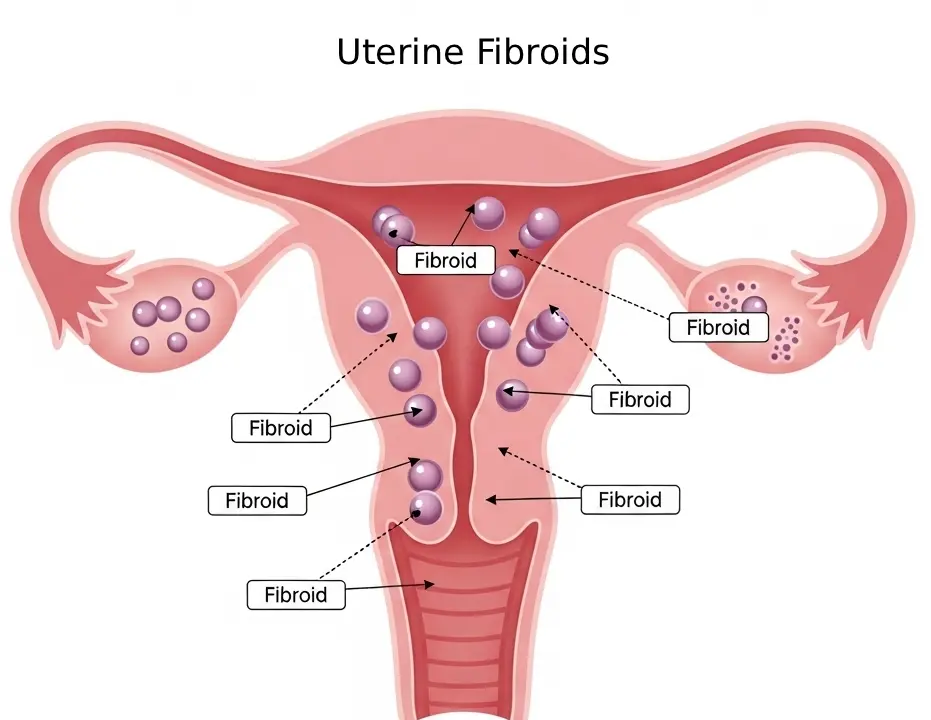
Diagnosis Uterine fibroids are often discovered incidentally during a routine pelvic exam. During the exam, your doctor may feel irregularities in the shape of the uterus that suggest the presence of fibroids. If you have symptoms, additional tests may be recommended: Ultrasound: Uses sound waves to create images of the uterus. Transabdominal ultrasound: The transducer is moved over the abdomen …