
Overview
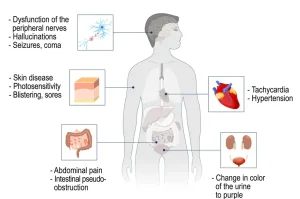
Porphyria is a group of rare disorders caused by abnormalities in the production of heme, a component of hemoglobin. These disorders result in a buildup of porphyrins or their precursors, which can cause a variety of symptoms affecting the skin, nervous system, and other organs. Porphyria can be inherited or acquired and may present differently depending on the type.
Symptoms
Symptoms vary depending on the type of porphyria but commonly include:
-
Abdominal pain, nausea, and vomiting
-
Muscle weakness or cramping
-
Sensitivity to sunlight, causing blistering, itching, or redness on exposed skin
-
Dark or reddish urine
-
Neurological symptoms such as seizures, confusion, or anxiety
-
Rapid heartbeat or high blood pressure during acute attacks
Causes
Porphyria occurs due to defects in enzymes involved in heme production:
-
Genetic mutations leading to enzyme deficiencies (inherited porphyria)
-
Certain medications, alcohol, or hormonal changes triggering attacks (acquired porphyria)
-
Liver dysfunction or other metabolic disorders may exacerbate symptoms
Risk factors
Factors that increase the risk of porphyria include:
-
Family history of porphyria
-
Female gender, as some types are more common in women
-
Use of certain drugs that affect liver metabolism
-
Hormonal changes, such as during menstruation
-
Excessive alcohol intake or smoking
Complications
Complications depend on the type and severity of porphyria:
-
Severe neurological attacks causing paralysis or respiratory failure
-
Chronic liver disease or liver cancer in some forms
-
Kidney damage from repeated acute attacks
-
Skin scarring or infections due to sun sensitivity
-
Psychological symptoms such as anxiety or depression
Prevention
While inherited porphyria cannot be fully prevented, risk of attacks and complications can be reduced by:
-
Avoiding triggers such as certain medications, alcohol, and smoking
-
Protecting skin from sunlight using clothing and sunscreen
-
Following a balanced diet and maintaining proper hydration
-
Regular medical monitoring for liver and kidney function
-
Prompt treatment of acute attacks under medical supervision
Early recognition and management of porphyria are essential to reduce symptoms, prevent complications, and maintain quality of life.
Advertisement
