
Overview
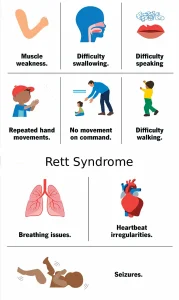
Rett syndrome is a rare genetic neurological disorder that primarily affects girls and leads to severe impairments in brain development. Children with Rett syndrome typically appear to develop normally during the first months of life, followed by a period of developmental regression. The condition affects movement, communication, and cognitive abilities and is caused by mutations in the MECP2 gene.
Symptoms of Rett Syndrome
Symptoms usually begin between 6 and 18 months of age and progress through stages over time.
-
Loss of purposeful hand skills, replaced by repetitive hand movements such as wringing or clapping
-
Slowed or halted head growth
-
Loss of spoken language or communication skills
-
Difficulty with walking, balance, and coordination
-
Breathing irregularities, including breath-holding or hyperventilation
-
Seizures
-
Sleep disturbances
-
Intellectual disability
Causes of Rett Syndrome
Rett syndrome is caused by mutations in the MECP2 gene located on the X chromosome. This gene plays a critical role in brain development and nerve cell function.
In most cases:
-
The mutation occurs spontaneously and is not inherited
-
Boys are rarely affected, and when they are, symptoms are usually more severe
Risk Factors for Rett Syndrome
There are no typical environmental or lifestyle risk factors associated with Rett syndrome.
-
Being female
-
Presence of a spontaneous MECP2 gene mutation
-
Family history in very rare inherited cases
Complications of Rett Syndrome
Rett syndrome can lead to a wide range of long-term medical and functional complications.
-
Severe intellectual and developmental disabilities
-
Loss of mobility and increased risk of scoliosis
-
Breathing and swallowing difficulties
-
Cardiac rhythm abnormalities
-
Poor growth and nutritional problems
-
Reduced life expectancy in severe cases
Ongoing medical care can help manage many of these complications.
Prevention of Rett Syndrome
There is no known way to prevent Rett syndrome, as it results from genetic mutations that occur randomly.
-
Genetic counseling for families with a known history of Rett syndrome
-
Prenatal genetic testing in rare inherited cases
-
Early diagnosis and intervention to improve quality of life
While Rett syndrome is a lifelong condition, early supportive therapies and multidisciplinary care can significantly improve daily functioning and overall well-being.
Advertisement
