
Overview
Skin cancer is a condition in which abnormal skin cells grow uncontrollably. It most often develops on areas of the skin exposed to sunlight, but it can occur anywhere on the body. Skin cancer is one of the most common types of cancer worldwide. Early detection is important, as most skin cancers can be successfully treated when found early.
Symptoms
Symptoms of skin cancer vary depending on the type, but changes in the skin are the most common warning signs.
-
A new growth, mole, or spot on the skin
-
A sore that does not heal or heals and returns
-
Changes in the size, shape, color, or texture of a mole
-
Irregular borders or uneven coloring of a skin lesion
-
Itching, bleeding, or pain in a skin area
Any unusual or persistent skin change should be evaluated by a healthcare professional.
Causes
Skin cancer is primarily caused by damage to skin cell DNA, most commonly from ultraviolet radiation from the sun or tanning devices. This damage leads to abnormal cell growth. Other factors such as genetic susceptibility and exposure to certain chemicals can also contribute to the development of skin cancer.
Risk Factors
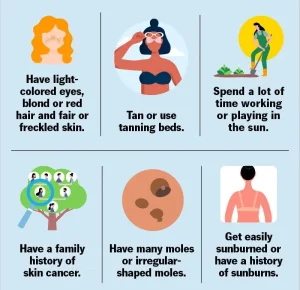
Several factors increase the risk of developing skin cancer.
-
Prolonged or intense sun exposure
-
History of sunburns, especially in childhood
-
Use of tanning beds or lamps
-
Fair skin, light hair, or light eye color
-
Family or personal history of skin cancer
-
Weakened immune system
-
Presence of many or unusual moles
Complications
If not treated early, skin cancer can grow deeper into the skin and spread to other parts of the body. Advanced cases may require extensive treatment and can be life-threatening. Some types of skin cancer may recur even after treatment, requiring long-term monitoring.
Prevention
Prevention focuses on protecting the skin from ultraviolet radiation. Limiting sun exposure, especially during peak hours, and wearing protective clothing help reduce risk. Using broad-spectrum sunscreen regularly and avoiding tanning beds are important preventive measures. Performing regular skin self-examinations and seeking medical advice for suspicious skin changes support early detection and better outcomes.
Advertisement
