
Overview
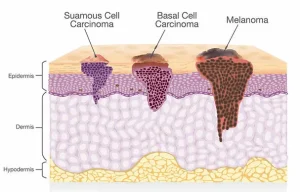
Squamous cell carcinoma of the skin is a common type of skin cancer that develops from squamous cells, which make up the middle and outer layers of the skin. It often appears on areas of the body that receive frequent sun exposure, such as the face, ears, neck, scalp, hands, and arms. While it typically grows slowly, squamous cell carcinoma can become aggressive if left untreated and may spread to other parts of the body.
Symptoms
The appearance of squamous cell carcinoma can vary, but common signs include:
-
A firm, red nodule on the skin
-
A flat sore with a scaly or crusted surface
-
A rough, scaly patch that may bleed or crust
-
An open sore that does not heal or repeatedly heals and reopens
-
A wart-like growth
Lesions may be tender, itchy, or painful, especially as the cancer progresses.
Causes
Squamous cell carcinoma of the skin is primarily caused by damage to the DNA of skin cells. This damage most often results from prolonged exposure to ultraviolet radiation from sunlight or tanning beds. Over time, repeated UV exposure leads to abnormal cell growth and increases the risk of cancer formation.
Risk Factors
Several factors can increase the risk of developing squamous cell carcinoma of the skin:
-
Long-term or intense sun exposure
-
Use of tanning beds
-
Fair skin, light hair, and light-colored eyes
-
Older age
-
A weakened immune system
-
History of precancerous skin lesions or previous skin cancers
-
Chronic skin inflammation or non-healing wounds
Having these risk factors increases susceptibility but does not guarantee cancer development.
Complications
If not treated early, squamous cell carcinoma of the skin can lead to complications such as:
-
Local tissue destruction
-
Scarring or disfigurement
-
Spread to nearby lymph nodes or distant organs
-
Increased risk of recurrence
Early diagnosis and appropriate treatment greatly reduce the risk of serious complications.
Prevention
Although not all cases can be prevented, several measures help reduce the risk of squamous cell carcinoma of the skin:
-
Limiting sun exposure, especially during peak hours
-
Using broad-spectrum sunscreen regularly
-
Wearing protective clothing, hats, and sunglasses
-
Avoiding tanning beds
-
Performing regular skin self-examinations
-
Seeking medical evaluation for new or changing skin lesions
Consistent sun protection and early detection are key to reducing risk and improving outcomes.
Advertisement
