
Overview
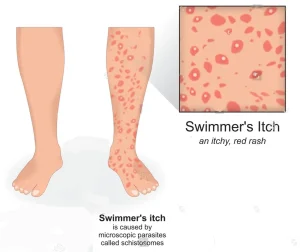
Swimmer’s itch is a skin rash caused by an allergic reaction to microscopic parasites that live in certain freshwater lakes, ponds, and rivers. The condition is also known as cercarial dermatitis. These parasites normally infect birds and small aquatic animals, but they can accidentally penetrate human skin when people swim or wade in contaminated water.
Once the parasites enter the skin, they quickly die because humans are not their natural host. However, their presence triggers an allergic reaction that leads to itching and a rash. Swimmer’s itch is not contagious and usually clears up on its own within a few days.
The condition is more common during warm months when people spend more time swimming in natural bodies of water.
Symptoms
Symptoms usually appear within minutes to several hours after swimming in contaminated water.
Common symptoms include:
-
Tingling or burning sensation on the skin shortly after leaving the water
-
Small reddish pimples or bumps on exposed skin
-
Intense itching
-
Rash that may resemble insect bites
-
Blisters in more severe reactions
The rash typically appears on areas of the body that were not covered by swimwear.
Causes
Swimmer’s itch occurs when parasite larvae released from infected snails in freshwater mistakenly penetrate human skin.
Possible causes include:
-
Swimming or wading in freshwater lakes, ponds, or rivers containing the parasites
-
Contact with water where infected birds or animals are present
-
Warm weather that increases parasite activity in water
These parasites normally complete their life cycle in birds or aquatic animals, but they cannot survive in humans.
Risk Factors
Certain factors can increase the risk of developing swimmer’s itch.
Risk factors include:
-
Swimming in shallow freshwater areas
-
Spending long periods in natural lakes or ponds
-
Swimming in areas with a large population of birds or snails
-
Frequent swimming in untreated natural waters
-
Being a child or frequent swimmer
Children may have a higher risk because they often spend more time playing in shallow water.
Complications
Swimmer’s itch usually does not cause serious complications and typically resolves without medical treatment.
Possible complications include:
-
Severe itching that disrupts sleep or daily activities
-
Skin irritation from scratching
-
Secondary bacterial infection if the skin becomes broken from scratching
People who experience repeated exposure may develop stronger allergic reactions over time.
Prevention
Preventing swimmer’s itch mainly involves reducing contact with contaminated water and protecting the skin.
Preventive measures include:
-
Avoiding swimming in areas known to have swimmer’s itch outbreaks
-
Staying out of shallow water where snails are common
-
Towel-drying the skin immediately after leaving the water
-
Showering with clean water after swimming
-
Wearing protective swimwear when swimming in natural lakes or ponds
-
Avoiding feeding birds near swimming areas, which can attract parasite hosts
Taking these precautions can significantly reduce the risk of developing swimmer’s itch.
Request an appointment
Advertisement
